


About Beyond the Minbar: Essential Mosque Sound Systems for Clear Adhan and Khutbah
A mosque’s spiritual life is deeply intertwined with sound. The Adhan, the beautiful call to prayer, resonates five times a day, inviting the community to gather. The Khutbah, the Friday sermon, provides guidance, reflection, and spiritual nourishment. The clarity and reach of these vocalizations are paramount. A poor sound system can create a disorienting echo, muffle the Imam’s voice, or fail to reach those in the back rows or outside the prayer hall. In a world where distractions are constant, ensuring every word of the Khutbah and every note of the Adhan is clear, crisp, and powerful is a fundamental responsibility for any mosque committee.
This guide, Beyond the Minbar: Essential Mosque Sound Systems for Clear Adhan and Khutbah | Masjid Direct, offers a comprehensive look into the world of mosque audio technology. It goes far beyond simply placing a microphone on the minbar. We explore the intricate science of acoustics, the selection of appropriate equipment, and the strategic placement of speakers to achieve perfect audio distribution. We understand that a mosque’s architecture—with its high ceilings, domes, and vast open spaces—presents unique challenges for sound engineering. This guide is designed to empower mosque leaders, technical volunteers, and community members with the knowledge to make informed decisions that will enhance the spiritual experience for all congregants.
The goal is not just to be heard, but to be understood. A high-quality sound system facilitates a deeper connection to the spiritual message. It ensures that the Imam’s voice carries authority and warmth, and that the beautiful recitation of the Quran is appreciated in its entirety. This guide delves into the specifics of different audio components, from microphones and mixers to amplifiers and loudspeakers, explaining their functions and how they work together as a cohesive system. It is a practical resource for both new mosque constructions and existing masjids looking to upgrade their audio setup.
We will discuss how to identify common acoustic problems and provide solutions that are both effective and budget-friendly. We will also touch upon the importance of regular maintenance and system checks to prevent technical failures during crucial times. Ultimately, Beyond the Minbar: Essential Mosque Sound Systems for Clear Adhan and Khutbah | Masjid Direct aims to provide a clear roadmap for creating a sound environment that is as spiritually uplifting as the words being spoken.
Details of Beyond the Minbar: Essential Mosque Sound Systems for Clear Adhan and Khutbah
The design and implementation of a mosque sound system require meticulous attention to detail. It’s a complex task that involves understanding acoustics, electronic components, and the unique needs of a sacred space. Beyond the Minbar: Essential Mosque Sound Systems for Clear Adhan and Khutbah | Masjid Direct emphasizes a systematic approach to this challenge. The details of a sound system are what separate a good setup from a great one. This starts with the microphones, the first point of contact for sound. The choice between a handheld microphone, a lavalier, or a high-quality condenser mic on a stand depends on the specific use case, whether it’s for the Adhan from a minaret, the Khutbah from the minbar, or a lecture in a classroom.
Microphone Selection and Placement
The microphone is the single most critical piece of equipment for capturing a clear voice. For the Khutbah, a high-quality cardioid or shotgun microphone mounted on the minbar is often ideal, as it focuses on the speaker’s voice while rejecting background noise. This prevents the echo and feedback common in large, empty spaces. For the Adhan, a durable, weather-resistant microphone is needed for the minaret, capable of withstanding the elements while capturing the beautiful call with perfect clarity. The type of microphone, its sensitivity, and its polar pattern are all details that have a huge impact on the final sound quality.
The Role of the Mixer and Amplifier
The mixer is the control center of the sound system. It allows the audio engineer to balance multiple inputs, such as the Imam’s microphone, a background sound source, or a separate microphone for another speaker. A good mixer offers control over equalization (EQ), which can be used to fine-tune the sound to a specific space, reducing harsh frequencies and enhancing vocal warmth. The amplifier is the powerhouse that takes the mixed audio signal and boosts it to a level powerful enough to drive the loudspeakers. The power of the amplifier must be carefully matched to the power rating of the speakers to ensure efficiency and prevent damage.
Strategic Loudspeaker Placement
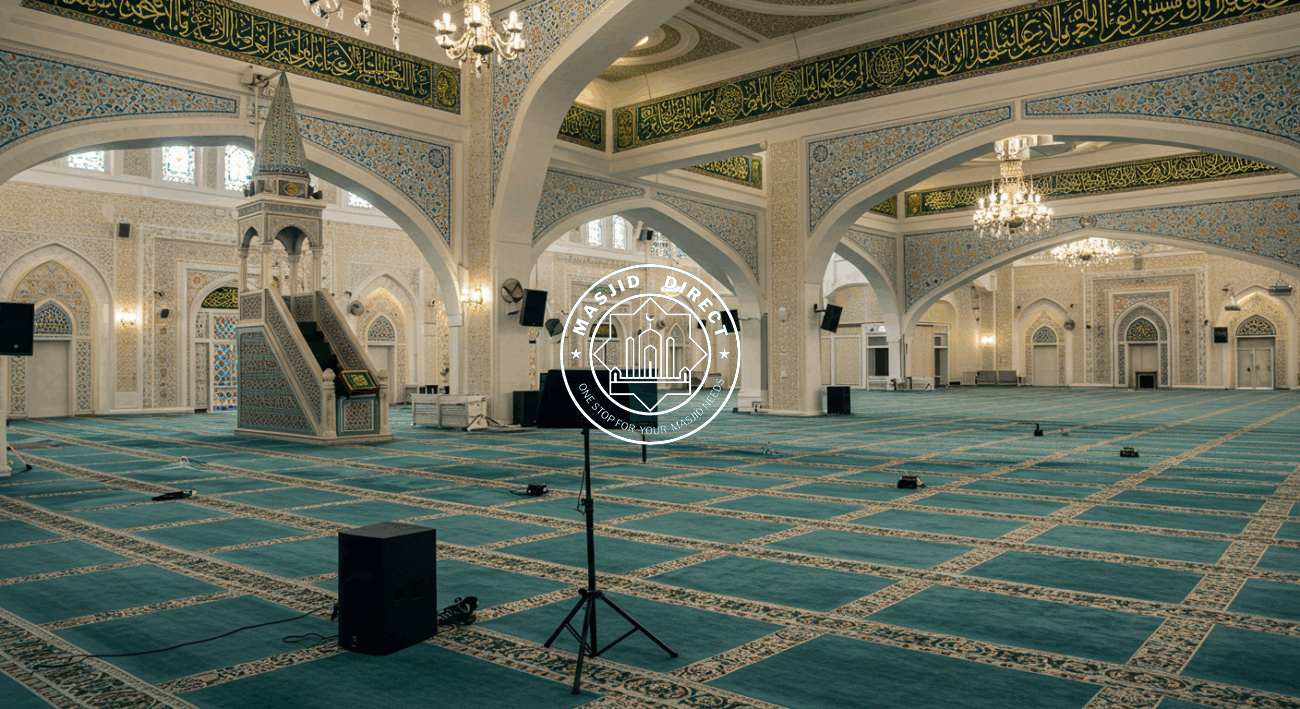
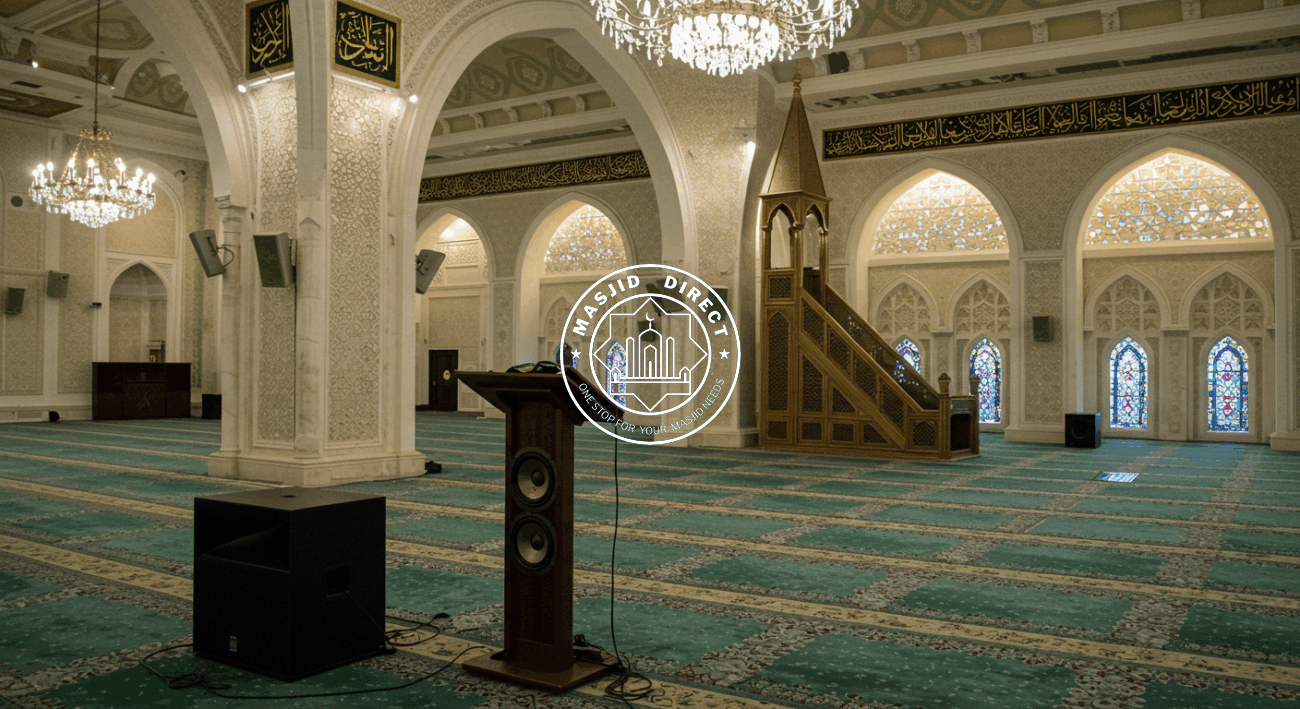
One of the most common mistakes in mosque sound system design is the improper placement of loudspeakers. Simply putting a few large speakers at the front of the hall can lead to a loud, distorted sound near the front and an incomprehensible echo at the back. A more effective solution involves distributing smaller speakers strategically throughout the prayer hall. This concept is known as a distributed sound system. By placing speakers at regular intervals, you ensure that every congregant hears the sound at roughly the same volume and with the same clarity, regardless of their location. The type of speaker is also important. Line array speakers are often used in modern mosques for their ability to project sound over long distances with minimal loss of clarity, a key feature of the best Beyond the Minbar: Essential Mosque Sound Systems for Clear Adhan and Khutbah | Masjid Direct installations.
Addressing Acoustics and Reverberation
Acoustics are the final, and most challenging, detail. Mosques often have high, hard, flat surfaces that cause sound to bounce around, creating what is known as reverberation. Excessive reverberation makes speech unintelligible. The ideal sound system should work with the mosque’s architecture, not against it. This can be achieved through careful speaker placement, as well as the use of sound-absorbing materials like mosque carpets and acoustic panels. These panels can be discreetly integrated into the architectural design. The goal is to reduce the “echo” to a manageable level, allowing the spoken word to be crisp and clear. This is a subtle but profound detail that can completely transform the audio experience.
The Importance of Professional Calibration
Finally, a sound system is only as good as its calibration. A professional audio engineer will tune the system to the specific acoustics of the mosque, adjusting EQ settings, speaker delays, and volume levels to create a perfect soundscape. This process ensures that the system performs optimally, providing a clear and uniform sound to every part of the mosque. The details covered in Beyond the Minbar: Essential Mosque Sound Systems for Clear Adhan and Khutbah | Masjid Direct ensure that a mosque committee has a complete understanding of what is required for a truly high-quality audio system.
Features of Beyond the Minbar: Essential Mosque Sound Systems for Clear Adhan and Khutbah
The guide, Beyond the Minbar: Essential Mosque Sound Systems for Clear Adhan and Khutbah | Masjid Direct, highlights a range of features that define a modern, high-performance mosque sound system. These features are designed to address the unique challenges of a sacred space and ensure an exceptional audio experience for all. One of the primary features is Digital Signal Processing (DSP). Modern mixers and amplifiers often include built-in DSP, which allows for advanced control over audio signals. This includes features like automatic feedback suppression, which prevents the dreaded high-pitched screech from a microphone being too close to a speaker. DSP also allows for sophisticated equalization and dynamic range compression, ensuring the Imam’s voice remains at a consistent, comfortable volume regardless of how loudly or softly he speaks.
Another key feature is scalable and modular design. A great sound system is not a one-size-fits-all solution. It should be designed to grow and adapt with the mosque’s needs. A modular system allows a mosque to start with a basic setup and add components later, such as speakers for an overflow area or a recording system for the Khutbah. This flexibility is a cost-effective way to ensure the mosque’s audio capabilities can expand as its community grows. This approach also allows for easier maintenance and upgrades.
The guide also emphasizes the importance of user-friendly controls. While a professional may be needed for initial setup and calibration, the daily operation of the sound system should be simple enough for a technical volunteer to manage. This includes easy-to-use mixers with clearly labeled controls and a logical layout. Some systems even feature presets for different scenarios, such as prayer, Khutbah, or lectures, so a user can switch modes with the push of a button. This simplicity ensures consistent, high-quality audio without requiring a professional sound engineer on site for every prayer.
A final critical feature is durability and reliability. A mosque sound system is a long-term investment that must withstand years of continuous use. The components should be built to a high standard, with robust construction and a proven track record of reliability. For outdoor components like minaret speakers, weather resistance is a crucial feature. The guide, Beyond the Minbar: Essential Mosque Sound Systems for Clear Adhan and Khutbah | Masjid Direct, promotes the use of commercial-grade audio equipment, which is designed for continuous operation and provides a superior return on investment through its longevity and performance.
Areas of Beyond the Minbar: Essential Mosque Sound Systems for Clear Adhan and Khutbah
The principles outlined in Beyond the Minbar: Essential Mosque Sound Systems for Clear Adhan and Khutbah | Masjid Direct are not limited to the main prayer hall. A comprehensive mosque sound system must address all the areas where sound is important.
The Main Prayer Hall: The Core of the Sound System
The main prayer hall is the central focus of any mosque sound system design. The challenge here is to provide uniform coverage to a large, often acoustically challenging, space.
Designing for Uniform Sound Distribution
The primary goal is to ensure that every worshipper, from the front row to the back, hears the Imam’s voice with the same clarity and volume. This is best achieved with a distributed sound system, where multiple smaller speakers are strategically placed to fill the space evenly. Beyond the Minbar: Essential Mosque Sound Systems for Clear Adhan and Khutbah | Masjid Direct emphasizes a design that avoids creating “hot spots” of loud sound near the speakers.
The Women’s Prayer Area: Ensuring Inclusion
Many mosques have a separate, often acoustically isolated, prayer area for women. It is essential that the sound system extends to this area with the same quality as the main hall.
Independent and Integrated Audio Solutions
The women’s section should have its own set of speakers, connected to the main system but with the ability to control volume independently. This ensures that the audio is neither too loud nor too soft. In some cases, a separate microphone might be needed for a lecture or announcement intended for this area, requiring a flexible mixer setup.
The Minaret and External Area: The Call to Prayer
The Adhan is a public invitation to prayer, and its sound must be clear and far-reaching. The minaret sound system is a specialized part of the overall setup.
Weather-Resistant and Powerful Loudspeakers
Loudspeakers for the minaret must be weather-resistant and capable of producing a powerful, clear sound that can be heard across the neighborhood. They should be strategically mounted to project the sound in a controlled manner, avoiding unnecessary noise pollution while fulfilling their spiritual purpose. The system should be easy to control, allowing for the Adhan to be recited live or from a high-quality recording.
Community and Multi-Purpose Rooms: Versatility and Functionality
Mosques often have rooms for lectures, classes, or community gatherings. The sound system for these areas must be versatile enough to handle a variety of uses.
Flexible and User-Friendly Audio Systems
These rooms require a system that can accommodate different microphones, from lavaliers for a lecturer to a microphone for a panel discussion. A simple, user-friendly mixer is key, allowing a non-technical volunteer to set up the system quickly. Wireless microphone options are particularly useful for these multi-purpose spaces, as they offer flexibility and freedom of movement.
Application Examples of Beyond the Minbar: Essential Mosque Sound Systems for Clear Adhan and Khutbah
Here are some practical examples of how the principles from Beyond the Minbar: Essential Mosque Sound Systems for Clear Adhan and Khutbah | Masjid Direct have been applied to real-world projects.
Example 1: The New Community Mosque
A newly constructed mosque needed a sound system from scratch that was both state-of-the-art and future-proof.
Integrated Digital Sound System
The designers installed a comprehensive digital sound system with a central DSP unit. This unit was programmed with presets for the five daily prayers, the Friday Khutbah, and special events. A wireless lavalier microphone was chosen for the Imam, offering him freedom of movement while speaking. The system automatically adjusted volume and equalization to match the speaker’s voice, ensuring perfect clarity at all times.
Distributed Speakers and Minaret Integration
To ensure uniform sound, a distributed system of small, high-quality speakers was discreetly mounted on the walls. For the minaret, a weather-resistant horn speaker was installed, connected to the central system. A control panel near the minbar allowed the Muazzin to activate the Adhan with a single button press. This created a seamless and professional audio experience for the entire community.
Example 2: The Historic Grand Mosque
A large, historic mosque with a massive dome and stone walls faced a severe echo problem that made the Khutbah almost unintelligible.
Acoustic Treatment and Speaker Array
The first step was to address the acoustics. The committee added discreet, custom-designed acoustic panels on the walls that matched the mosque’s historic aesthetic. Then, instead of a traditional speaker setup, they installed a line array speaker system. These speakers projected a narrow, focused beam of sound, reducing the sound reflections off the dome and walls. The result was a dramatic improvement in clarity, making the Khutbah understandable even in the furthest corners of the hall.
Upgraded Microphones and Mixing Board
The old, outdated microphones were replaced with high-quality condenser microphones on the minbar. A new, professional mixing board with digital controls was installed, allowing the technical team to fine-tune the audio with precision. The old, chaotic system was replaced with a new one that was easy to manage and produced a clear, rich sound that honored the mosque’s history.
Example 3: The Small Neighborhood Masjid
A small, local mosque had a very limited budget but a great need to improve its sound system.
Simple and Effective Equipment Upgrade
The committee followed the recommendations in Beyond the Minbar: Essential Mosque Sound Systems for Clear Adhan and Khutbah | Masjid Direct to focus on the most essential components. They invested in one high-quality microphone for the Imam and a modern, compact mixer with built-in feedback suppression. They also replaced their old, single-point speaker with two smaller, more efficient speakers placed on opposite sides of the prayer hall, creating a more balanced sound.
Community-Led Installation and Calibration
To save on costs, a local community member with technical skills volunteered to install and calibrate the system. The new equipment was easy to set up and operate, and the improved sound quality was immediately noticeable. This project proved that a significant improvement is possible even with a modest budget and a committed community.
Example 4: The Multi-Purpose Islamic Center
An Islamic center with a large prayer hall, classrooms, and a community hall needed a sound system that could serve multiple purposes simultaneously.
Zoned Audio System with Matrix Mixer
The designers installed a multi-zoned audio system using a matrix mixer. This allowed them to send different audio signals to different parts of the building. For example, the Khutbah could be broadcast in the prayer hall while a separate lecture was taking place in a classroom, with its own independent microphone and speakers. The system also had the ability to broadcast the Adhan from the minaret to all zones when needed.
Flexible Wireless Microphones
For the community and classrooms, they implemented a system of wireless microphones, which could be easily moved and used in any of the different rooms. This setup provided ultimate flexibility, allowing the center to host multiple events at once without any audio interference. The system was robust and reliable, meeting the complex needs of a busy community hub.
Beyond the Minbar: Essential Mosque Sound Systems for Clear Adhan and Khutbah FAQs
This section addresses some of the most common questions that mosque committees and technical volunteers have about sound systems.
1. What is the difference between a minaret speaker and a prayer hall speaker?
Minaret speakers, also known as horn speakers, are specifically designed for long-range sound projection outdoors. They are weather-resistant and focus sound in a narrow beam to project over a large area. Prayer hall speakers, on the other hand, are designed for indoor use. They aim to provide a wide, even sound dispersion to cover a large indoor space without creating a harsh or distorted sound. They are built for clarity and vocal reproduction, not just volume. This is a critical distinction covered in Beyond the Minbar: Essential Mosque Sound Systems for Clear Adhan and Khutbah | Masjid Direct.
2. How do we prevent feedback (the high-pitched screech)?
Feedback is a common and frustrating problem in many sound systems. It occurs when a microphone picks up the sound from a speaker and amplifies it in a loop. To prevent it, you should first ensure the microphone is not pointed directly at a speaker. You can also use a directional microphone (like a cardioid) that picks up sound from the front and rejects sound from the sides and back. Finally, a system with a built-in feedback suppressor (a feature of modern DSP-equipped mixers) can automatically detect and eliminate the problematic frequencies.
3. Is it better to use wired or wireless microphones?
Both wired and wireless microphones have their pros and cons. Wired microphones are generally more reliable, don’t require batteries, and can offer a slightly higher sound quality. They are a good choice for a fixed location like a minbar. Wireless microphones offer unparalleled freedom of movement, making them ideal for lecturers who move around or for multi-purpose rooms. The quality of wireless systems has improved dramatically, but they can be susceptible to interference and require regular battery changes. The choice often depends on the specific application and budget.
4. How often should we maintain our sound system?
Regular maintenance is key to the longevity and reliability of your sound system. It is recommended to perform a basic check before every major use (like the Friday Khutbah), ensuring all microphones are working and all cables are secure. A more detailed check of the entire system, including cleaning connections and testing components, should be done at least once every six months. This proactive approach can prevent minor issues from becoming major failures during a critical time.
5. Can a poor sound system affect the spiritual experience of the worshippers?
Yes, absolutely. A poor sound system can be a significant distraction during prayer or the Khutbah. When the sound is distorted, muffled, or filled with echoes, it makes it difficult for congregants to focus on the message. The inability to hear the Quranic recitation or the Imam’s words clearly can hinder a person’s ability to connect with the spiritual moment. A high-quality, clear sound system, on the other hand, allows the message to be heard perfectly, facilitating a deeper sense of tranquility and devotion for everyone in the hall.
6. How can a mosque on a limited budget get a good sound system?
A limited budget doesn’t mean you have to settle for poor sound. A mosque can start with the most essential components: a single high-quality microphone for the Imam, a simple mixer with feedback suppression, and a pair of good-quality speakers. Focus on quality over quantity. Over time, you can add more speakers or components as the budget allows. Many suppliers, like Masjid Direct, offer packaged systems designed for different budgets and mosque sizes, making it easier to make a wise investment.
Beyond the Minbar: Essential Mosque Sound Systems for Clear Adhan and Khutbah | Masjid Direct serves as a vital guide for any mosque committee aiming to elevate the spiritual experience of their community. It provides the knowledge and a roadmap for moving past common audio problems and into a world of clear, powerful, and spiritually uplifting sound. A high-quality sound system is not a luxury but an essential tool that supports the very mission of the mosque: to gather the community in a space of peace, understanding, and devotion. By investing in the right equipment and understanding the principles of good sound design, a mosque can ensure that every word of the Adhan and every moment of the Khutbah resonates with perfect clarity, enriching the faith of all who listen.