


About A Step-by-Step Guide to Installing Mosque Carpets: From Selection to Serenity
The mosque is a sanctuary, a place of peace, reflection, and communal worship. The atmosphere within its walls is carefully curated to foster a sense of tranquility and spiritual focus. While many elements contribute to this, few are as fundamental as the masjid carpet. It is the literal foundation upon which the community stands, kneels, and prostrates in prayer. The process of installing a new carpet is more than just a renovation project; it is an act of service to the community, enhancing their spiritual experience and the physical comfort of the sacred space. A poorly installed carpet can lead to wrinkles, misaligned prayer rows, and a general sense of unease, while a flawless installation can elevate the entire atmosphere, creating a seamless and serene environment.
This guide, A Step-by-Step Guide to Installing Mosque Carpets: From Selection to Serenity | Masjid Direct, provides a comprehensive roadmap for mosque committees and community leaders. It takes you through the entire journey, from the initial crucial step of selecting the right carpet to the final, meticulous process of installation. We understand that this is a significant undertaking, involving budget considerations, logistical planning, and a deep sense of responsibility to the community. This guide is designed to simplify the process, empowering you with the knowledge and tools to ensure the project is a resounding success.
We will cover the essential phases: preparing the space, coordinating with professional installers, and what to expect during the installation itself. The focus is on achieving a perfect fit, ensuring that the prayer lines are straight, and that the final product is not only beautiful but also durable and long-lasting. Whether you are building a new mosque, replacing an old carpet, or simply seeking to understand the process, this guide offers practical, actionable advice.
Our goal is to help you transform your prayer hall into a space of unparalleled comfort and beauty. The right approach ensures that the spiritual focus of the congregation is never interrupted by practical concerns about the flooring. Ultimately, A Step-by-Step Guide to Installing Mosque Carpets: From Selection to Serenity | Masjid Direct is about creating a sacred space that truly serves the needs of its community.
Details of A Step-by-Step Guide to Installing Mosque Carpets: From Selection to Serenity
The installation of a mosque carpet is a detailed and multi-faceted process. It requires careful planning and a methodical approach to ensure a perfect, long-lasting result. This section of A Step-by-Step Guide to Installing Mosque Carpets: From Selection to Serenity | Masjid Direct breaks down the critical steps, from the initial consultation to the final finishing touches. The process begins long before the carpet is unrolled. It starts with the crucial phase of consultation and measurement.
Consultation and Precision Measurement
The first detail is getting the measurements right. A professional consultation is highly recommended, as an experienced installer will not only measure the total square footage but also account for every pillar, niche, and irregularity in the prayer hall. They will create a detailed layout plan that maps out the carpet’s pattern and prayer rows (saffs), ensuring perfect alignment. This plan is essential for a seamless installation, especially for custom-designed carpets.
The Role of the Subfloor
A detail often overlooked is the state of the subfloor. A carpet will only be as good as the surface it’s laid on. The subfloor must be clean, dry, and perfectly smooth. Any imperfections, such as cracks, bumps, or moisture, can compromise the integrity of the installation. A professional installer will inspect the subfloor and perform any necessary repairs or preparations, such as leveling with a concrete patch or sealing against moisture. This foundational step is non-negotiable for a professional and durable finish.
Pattern and Alignment
The spiritual and practical value of a masjid carpet lies in its ability to guide worshippers into straight prayer rows. This is achieved through the carpet’s pattern, which must be installed with meticulous precision. Installers use laser levels and precise measurements to ensure that every line and pattern element aligns perfectly, creating a visually harmonious and spiritually guided space. This detail is especially important in large prayer halls where small misalignments can become significant over a long distance.
Cutting and Seaming
Cutting the carpet to fit the prayer hall is a precise art. Installers use specialized tools to cut the carpet rolls to the exact dimensions of the room and around obstacles. The seaming of the different carpet pieces is another critical detail. A skilled installer will use a heat-seaming tape and a professional iron to create seams that are virtually invisible. Proper seaming is essential for both the aesthetic appeal and the longevity of the carpet, as a weak seam can lead to fraying and damage over time.
Stretching and Securing
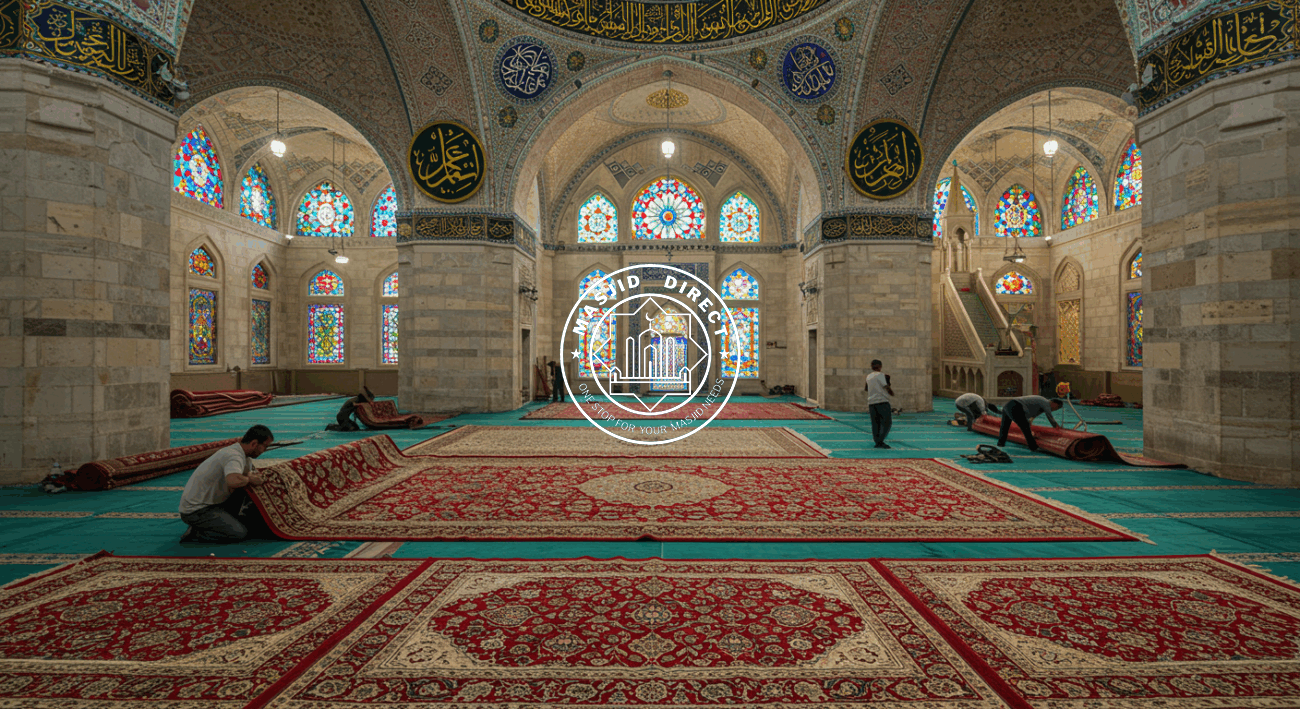
Once the carpet is laid out, it must be properly stretched and secured. This is typically done with a power stretcher, a tool that ensures the carpet is pulled taut from wall to wall. This process prevents the carpet from bubbling, wrinkling, and shifting with heavy use. The edges are then secured with tack strips along the perimeter of the room. This final detail is crucial for a smooth, flat surface that will remain stable for years to come. The principles and details outlined in A Step-by-Step Guide to Installing Mosque Carpets: From Selection to Serenity | Masjid Direct are designed to ensure every phase of the installation is handled with professional care.
Features of A Step-by-Step Guide to Installing Mosque Carpets: From Selection to Serenity
The guide, A Step-by-Step Guide to Installing Mosque Carpets: From Selection to Serenity | Masjid Direct, is defined by a series of features that make the installation process seamless and successful. One of the most important features is its comprehensive project management approach. The guide breaks down the entire process into manageable stages, from the initial project planning and budgeting to the final post-installation check. This structured approach helps mosque committees avoid common pitfalls and ensures that the project stays on track, on time, and within budget. It also provides a clear checklist of tasks, so nothing is forgotten.
Another key feature is the emphasis on professional craftsmanship. While some may consider a DIY installation, the guide strongly recommends hiring professional, experienced installers. The skills required for precise measurement, cutting, seaming, and stretching are specialized. A professional installation ensures that the carpet is laid out flawlessly, which is critical for both the spiritual and aesthetic quality of the prayer hall. The guide provides a list of key questions to ask potential installers to ensure they have the necessary expertise.
The focus on functionality is a central feature. The guide highlights how every aspect of the installation process, from the alignment of the prayer rows to the durability of the seams, contributes to the overall functionality of the sacred space. It explains how a well-installed carpet can improve the flow of traffic, ensure proper alignment during prayer, and even contribute to the mosque’s acoustic properties. This focus on functionality sets the guide apart from a simple how-to manual and positions it as a resource for creating a truly optimal prayer environment.
Finally, the guide, A Step-by-Step Guide to Installing Mosque Carpets: From Selection to Serenity | Masjid Direct, features a strong emphasis on long-term investment and maintenance. It provides practical advice on how to care for the new carpet after installation to ensure its longevity. This includes tips on regular cleaning, dealing with spills, and scheduling professional deep cleaning. By focusing on long-term care, the guide helps mosque committees protect their investment and ensures that the carpet will serve the community for many years to come, preserving its beauty and comfort.
Areas of A Step-by-Step Guide to Installing Mosque Carpets: From Selection to Serenity
The principles outlined in A Step-by-Step Guide to Installing Mosque Carpets: From Selection to Serenity | Masjid Direct apply to every area of a mosque where carpeting is used. While the main prayer hall is the most important area, a professional installation ensures consistency and quality throughout the entire building.
The Main Prayer Hall: The Heart of Worship
The main prayer hall is the most critical area for a flawless carpet installation. This is where a perfect alignment of the prayer lines is essential.
Precise Layout and Seamless Installation
The installation team must carefully plan the layout to ensure that the prayer lines run straight and true from the mihrab to the back of the hall. For custom carpets, this involves matching the pattern seamlessly across different carpet rolls. The finished product should appear as a single, continuous piece of fabric, free of any visible seams or imperfections.
The Women’s Prayer Area: A Space for Peace
The women’s prayer area deserves the same level of care and attention during installation as the main hall.
Ensuring Comfort and Uniformity
The carpet in the women’s section should be installed to the same high standards of quality and comfort. If the design mirrors that of the main hall, the installation team must ensure that the pattern and prayer lines align perfectly with the rest of the mosque’s layout, creating a sense of unity even in separate spaces.
The Foyer and Entrance: A Welcoming Transition
The mosque’s foyer and entrance are high-traffic areas that require a durable and well-installed carpet.
Durable Flooring and Transition Points
The carpet in the foyer must be installed to withstand significant wear and tear. A professional installation ensures that the carpet is secured tightly and that any transitions to other flooring types, such as tile or hardwood, are smooth and safe. This creates a welcoming first impression and prevents a tripping hazard.
The Multi-Purpose Hall: Flexibility and Functionality
For a multi-purpose hall, the installation of the carpet must allow for flexibility and durability.
Modular Carpet Tile Installation
In these areas, the guide recommends the use of modular carpet tiles. The installation process for these tiles is meticulous, ensuring each tile is perfectly aligned and secured. This method provides the flexibility to replace damaged tiles individually without having to replace the entire flooring, making it a practical and long-term solution.
Application of A Step-by-Step Guide to Installing Mosque Carpets: From Selection to Serenity
Scenario 1: A Large-Scale Project
For a large urban mosque with a complex, open-plan prayer hall, the installation process requires a strategic, phased approach. The project begins with a detailed laser scan of the entire space to create a precise digital blueprint. This blueprint is used to map out the carpet’s intricate geometric patterns and prayer lines, ensuring perfect alignment around pillars and across large open areas. The carpet is then custom-cut and prepared off-site, which minimizes disruption to daily prayers. The installation team uses specialized power stretchers and seaming tools to create a seamless, wall-to-wall surface, making the final result appear as a single, flawless piece of art.
Scenario 2: A Renovation Project for a Historic Building
In a historic mosque with an old, uneven subfloor and no perfectly straight walls, the installation requires a sensitive and skilled approach. The first step involves a comprehensive subfloor inspection and repair. The installation team takes the time to reinforce weak spots, level uneven surfaces, and ensure the foundation is sound. They then measure the space with a flexible, manual method, accounting for the unique angles and imperfections of the old building. The carpet is cut and installed with great care, with prayer lines subtly adjusted to accommodate the mosque’s natural architecture, preserving its unique character while providing a modern, comfortable surface.
Scenario 3: A Community-Led Effort
For a small, neighborhood mosque with a limited budget, the installation process can be a collaborative effort between professionals and the community. The mosque committee selects a durable, cost-effective carpet. A professional team is hired to handle the technical aspects of the installation, such as precise measurements, subfloor preparation, and expert cutting and stretching. The community’s volunteers take on the preliminary tasks, like removing the old carpet and clearing the space, which significantly reduces the overall cost. This partnership ensures a professional finish while fostering a sense of ownership and community spirit.
Scenario 4: A Modern Multi-Purpose Center
In a contemporary Islamic center that serves multiple functions, the installation is all about versatility and long-term functionality. The main prayer hall is fitted with a high-density, high-quality carpet that is securely installed for comfort and durability. In the adjacent multi-purpose halls and classrooms, the installation team lays down modular carpet tiles. This allows for a flexible and easy-to-maintain solution. If a section of the floor gets damaged from a spill or heavy foot traffic during an event, individual tiles can be replaced quickly and efficiently, without affecting the rest of the flooring.
A Step-by-Step Guide to Installing Mosque Carpets: From Selection to Serenity FAQs
This section addresses some of the most common questions that mosque committees and technical volunteers have about the process of installing a new carpet.
1. Why can’t we just do a DIY installation?
While a DIY approach may seem tempting to save money, it is highly discouraged for a mosque carpet. Professional installers have the specialized tools and expertise to ensure a perfect fit, and proper stretching and seaming, which are critical for the carpet’s longevity and appearance. A DIY job often results in wrinkles, visible seams, and misaligned prayer rows, which can detract from the spiritual atmosphere and lead to premature wear.
2. How long does a typical installation take?
The duration of an installation varies depending on the size and complexity of the project. A standard-sized prayer hall can often be completed in one to three days. Larger, more complex projects with multiple rooms or custom designs can take a week or longer. It’s important to coordinate with the installation team to minimize disruption to prayer times and community activities.
3. How do we prepare the space for installation?
The first step is to completely clear the prayer hall of all furniture, including shoe racks, bookshelves, and any other items. The floor should be swept and free of debris. The installation team will handle any final cleaning and subfloor preparation, but clearing the space beforehand can significantly reduce the installation time.
4. What should we look for in a professional installer?
Look for a company with a strong track record of installing mosque carpets. Check their portfolio, ask for references, and ensure they understand the specific requirements of a masjid, such as the importance of prayer line alignment. A good installer will also provide a detailed, itemized quote and a clear project timeline. The principles outlined in A Step-by-Step Guide to Installing Mosque Carpets: From Selection to Serenity | Masjid Direct can help you vet potential contractors.
5. How do we ensure the prayer lines are straight?
This is a critical detail that must be handled by the installation team. They will use precise measurements and laser levels to ensure the lines are straight and parallel. For custom carpets with prayer lines, they will also ensure that the pattern on each carpet roll aligns perfectly with the next. This precision is essential for a spiritually and visually pleasing result. You can learn more about the technical aspects of carpet installation from industry resources like the
6. What is the most common problem during installation?
One of the most common problems is improper stretching. If a carpet is not stretched tightly enough, it can develop wrinkles and bubbles over time, which not only looks bad but can also create a tripping hazard and lead to premature wear. A power stretcher is the only tool that can properly stretch a large carpet, making professional installation essential.
A Step-by-Step Guide to Installing Mosque Carpets: From Selection to Serenity | Masjid Direct provides a comprehensive and invaluable resource for anyone undertaking this important project. It moves beyond a simple product guide to offer a complete plan for success, from the initial choice of material to the final, professional installation. By understanding each step and working with a professional team, mosque committees can ensure that their new carpet is not just a beautiful addition, but a durable, comfortable, and spiritually uplifting foundation for the community. The result is a prayer hall that embodies a sense of tranquility and order, truly a sanctuary of serenity.