


Calligraphy and Carpet Pairing: Creating a Unified Sacred Atmosphere in Your Mosque
A mosque interior speaks before a single word of khutbah is uttered. The interplay between Islamic calligraphy wall art mosque installations and the carpet beneath worshippers’ feet sets the tone for reflection, unity and devotion. When these two elements are considered together rather than separately, the result is a space that feels intentional, serene and spiritually coherent. At Masjid Direct, we work with communities across the UK to ensure calligraphy, carpets and tiling speak the same visual language from the moment a worshipper enters.
Many committees approach calligraphy and flooring as separate procurement tasks, often sourced from different suppliers months apart. This fragmented approach frequently produces interiors that feel disjointed, even when each individual element is beautiful in isolation. A worshipper entering the prayer hall should experience a single, continuous aesthetic narrative—one where the eye moves effortlessly from the mihrab wall to the carpet rows without encountering jarring contrasts. This article explores how to achieve that continuity, drawing on classical design principles and practical guidance for committees planning renovations or new builds.
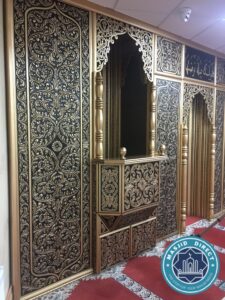
The Connection Between Calligraphy Art and Carpet Design
Calligraphy and carpet patterns share a common ancestry in Islamic art: geometric repetition, flowing script and symmetrical balance. Both traditions draw from the same wells of Arabesque motifs and sacred geometry, which is why they naturally complement one another when chosen thoughtfully.
A carpet with intricate medallion borders pairs beautifully with bold, sweeping Thuluth script, while minimalist Kufic calligraphy suits simpler geometric weaves. Mismatching ornate carpets with overly decorative calligraphy, however, can create visual clutter rather than harmony.
Treating wall art and flooring as one design system, rather than isolated purchases, is the foundation of a cohesive masjid interior.
It helps to think of the prayer hall as a layered composition, with the carpet forming the base register and the calligraphy forming the upper register. Just as a page of illuminated manuscript balances dense script against open margins, a mosque interior benefits from alternating areas of pattern and restraint. Designers often recommend selecting the calligraphy piece first, since it typically anchors the qibla wall and draws the most sustained visual attention during prayer, before choosing a carpet that supports—rather than competes with—that focal point.
Coordinating Colour Palettes Across Calligraphy, Rugs and Tiles
Colour consistency is the quickest way to unify a prayer hall. Gold-leaf calligraphy against deep green or burgundy carpet echoes classical mosque aesthetics, while muted earth tones and off-white calligraphy suit contemporary spaces. Matching accent colours—rather than identical shades—keeps the design dynamic without clashing.
Tilework, mihrab framing and even lighting fixtures should echo the same palette. A single rogue colour, such as a bright blue carpet beneath monochrome grey calligraphy, can disrupt the entire atmosphere.
For deeper guidance on selecting flooring tones alongside interior finishes, our masjid carpet and interior design guide explores palette coordination in detail.
Lighting plays an underappreciated role in how colour palettes are perceived throughout the day. Warm-toned LED fixtures can intensify the richness of gold calligraphy and deep burgundy carpets during evening prayers, while natural daylight streaming through windows may wash out subtler earth-toned schemes. Committees should view sample swatches of carpet and calligraphy framing under the mosque’s actual lighting conditions—both artificial and natural—before finalising orders, since colours that appear harmonious in a showroom can shift considerably once installed beneath a dome or alongside stained glass.
Case Examples: Harmonious Mosque Interiors
Seeing design principles applied in real settings clarifies how calligraphy and carpet choices translate into finished spaces. Two contrasting styles—traditional and contemporary—demonstrate how the same coordination principles adapt to different aesthetic goals.
Traditional Ottoman-Inspired Interiors
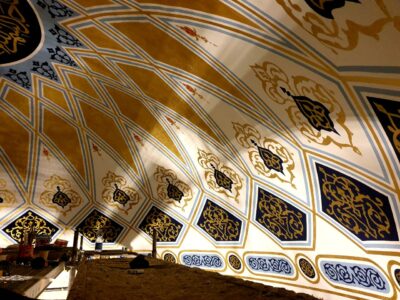
Ottoman-style mosques favour rich jewel-toned carpets—deep reds, emerald greens and royal blues—paired with gold or cream calligraphy panels featuring elaborate Thuluth or Diwani scripts. Domed ceilings often continue the motif with painted medallions that mirror the carpet’s central design.
This layered richness works because every element, from minbar woodwork to chandelier brass tones, references the same historical palette, creating a cohesive sense of grandeur and continuity with classical Islamic architecture.
Contemporary Minimalist Mosque Interiors
Modern masajid increasingly favour restrained palettes: grey or beige carpets with subtle linear patterns, paired with clean Kufic or Naskh calligraphy in black, charcoal or brushed metal finishes. Negative space becomes a design feature rather than something to fill.
This approach suits community centres and new-build mosques seeking a timeless, uncluttered atmosphere where calligraphy remains the visual focal point rather than competing with ornate flooring.
Many congregations find that a hybrid approach serves them best, borrowing restraint from contemporary design while retaining one or two traditional focal points, such as a single ornate calligraphy panel above the mihrab paired with an otherwise understated carpet. This blended strategy allows historic communities renovating older buildings to modernise without severing ties to established visual heritage, and it offers newer congregations a way to introduce warmth and reverence into spaces that might otherwise feel clinical.
Planning a Cohesive Calligraphy and Carpet Scheme with Masjid Direct
Achieving this level of coordination requires more than picking attractive products in isolation—it demands a unified design strategy from the outset. Masjid Direct offers bespoke masjid furnishing solutions that bring calligraphy artwork, carpet manufacturing and tiling together under one roof, ensuring every element is planned in relation to the others.
Our team provides Islamic Interior Design for Mosques consultations, working directly with committees to select palettes, scripts and weave patterns that reflect each community’s cultural heritage and architectural style. We also collaborate with trusted manufacturers to produce custom carpets sized precisely for your prayer hall.
Beyond aesthetics, our consultation process accounts for practical considerations such as footfall patterns, acoustic properties of carpet pile, and the durability of calligraphy framing materials in humid or high-traffic environments. We encourage committees to bring architectural drawings, photographs of existing fixtures, and even fabric or paint samples to early planning meetings, as these details allow our designers to propose combinations that are both visually unified and resilient to years of daily use.
If your renovation plans extend beyond flooring and wall art, our mosque sound systems guide covers another essential layer of creating a unified worship environment. Visit www.masjiddirect.com to begin planning your mosque’s complete interior transformation with a team experienced in delivering spiritually resonant, visually harmonious spaces across the UK and abroad.