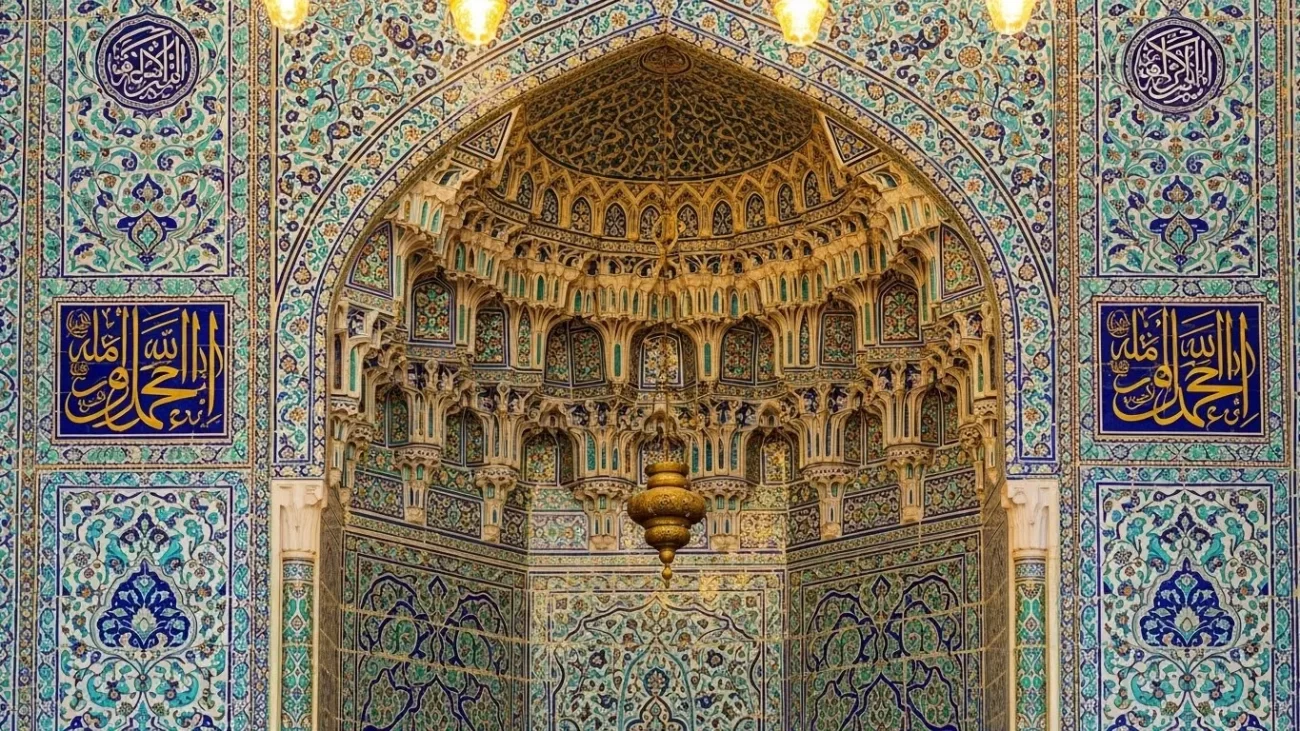


Turkish Mosque Tiles and Islamic Calligraphy: Creating a Timeless Prayer Hall
Some of the most memorable mosque interiors are not memorable because they contain more decoration. They are memorable because every element belongs together. Tiles, calligraphy, carpet, timber, lighting and architecture follow one visual language.
For UK mosques considering traditional Islamic interiors, Turkish mosque tiles and bespoke calligraphy provide an opportunity to create this consistency.
Why Tiles Work So Well in Mosque Architecture
Decorative ceramics have played an important role in Islamic architecture for centuries. They offer colour, pattern and architectural definition while working particularly well around mihrabs, entrance features and selected wall sections. Modern projects can draw on this tradition without attempting to reproduce a historical building exactly.
Traditional Turkish Colour Palettes
Blue, turquoise, white and deeper accent colours are strongly associated with many traditional ceramic styles. However, a successful project does not require every surface to become highly decorative. Using patterned tiles selectively can give important architectural areas greater emphasis while allowing the rest of the prayer hall to remain visually calm.
Using Tiles Around the Mihrab
The mihrab is one of the strongest locations for decorative tile work because it naturally forms the focal point of the qibla wall. Tile borders can frame the niche, while calligraphy or geometric designs can provide additional detail. Dimensions should be planned before manufacturing so that patterns terminate correctly rather than being awkwardly cut during installation.
Islamic Calligraphy as Architecture
Calligraphy should not be treated as ordinary wall decoration. Scale, positioning and surrounding negative space determine how well it integrates with the building. An inscription that looks appropriate on a drawing can appear completely different when installed several metres above floor level. For this reason, calligraphy should be designed in relation to the viewing distance and architecture.
Coordinate the Carpet
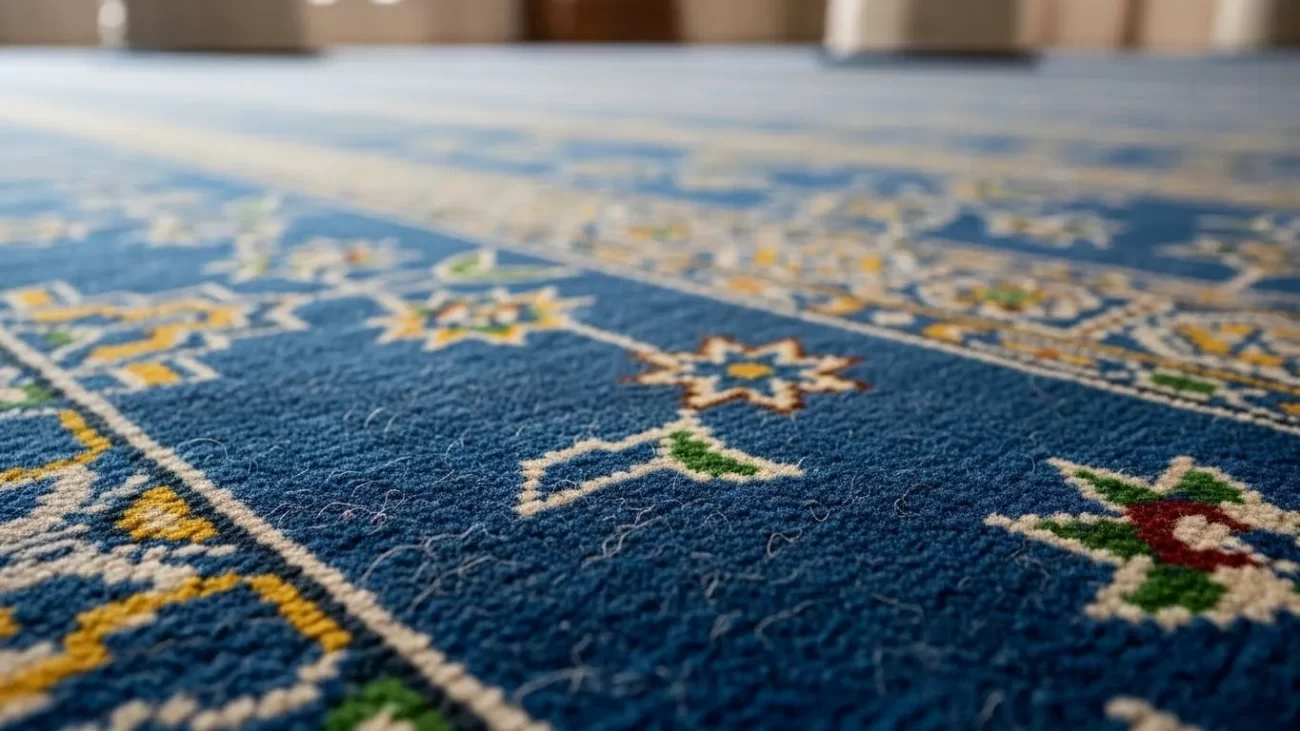
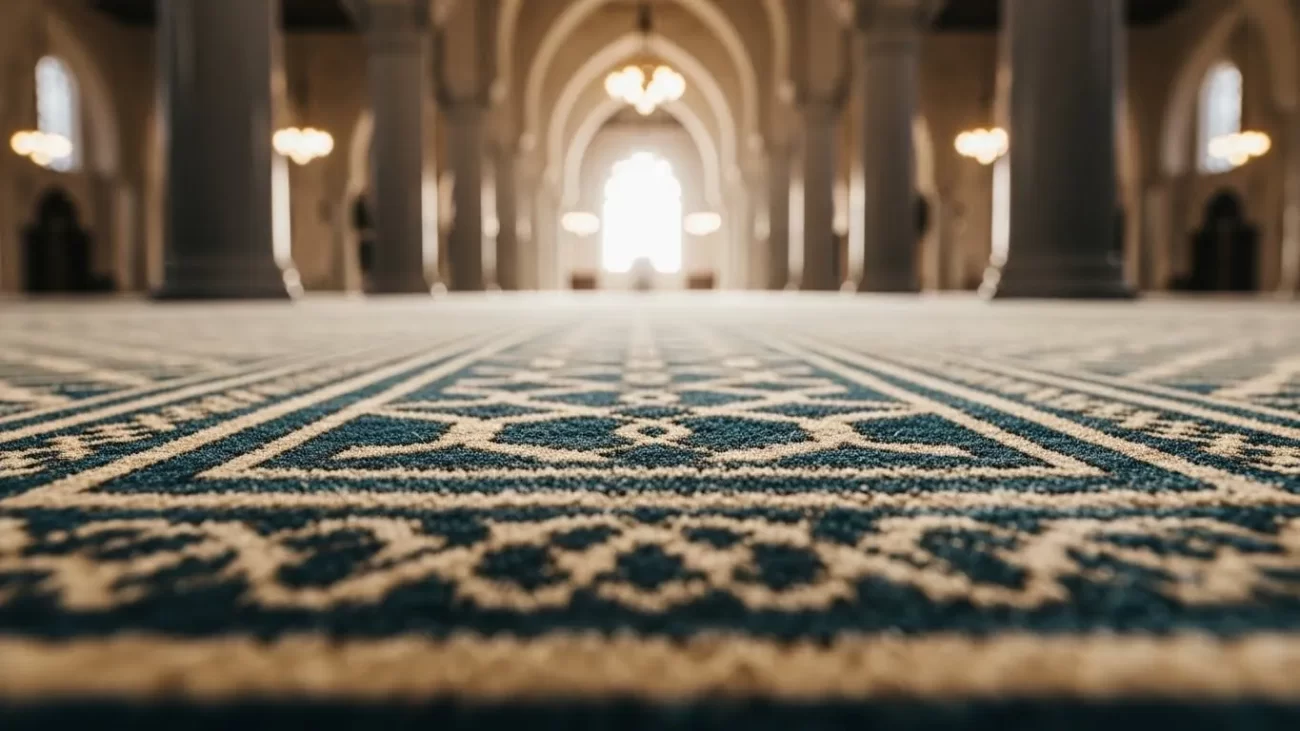
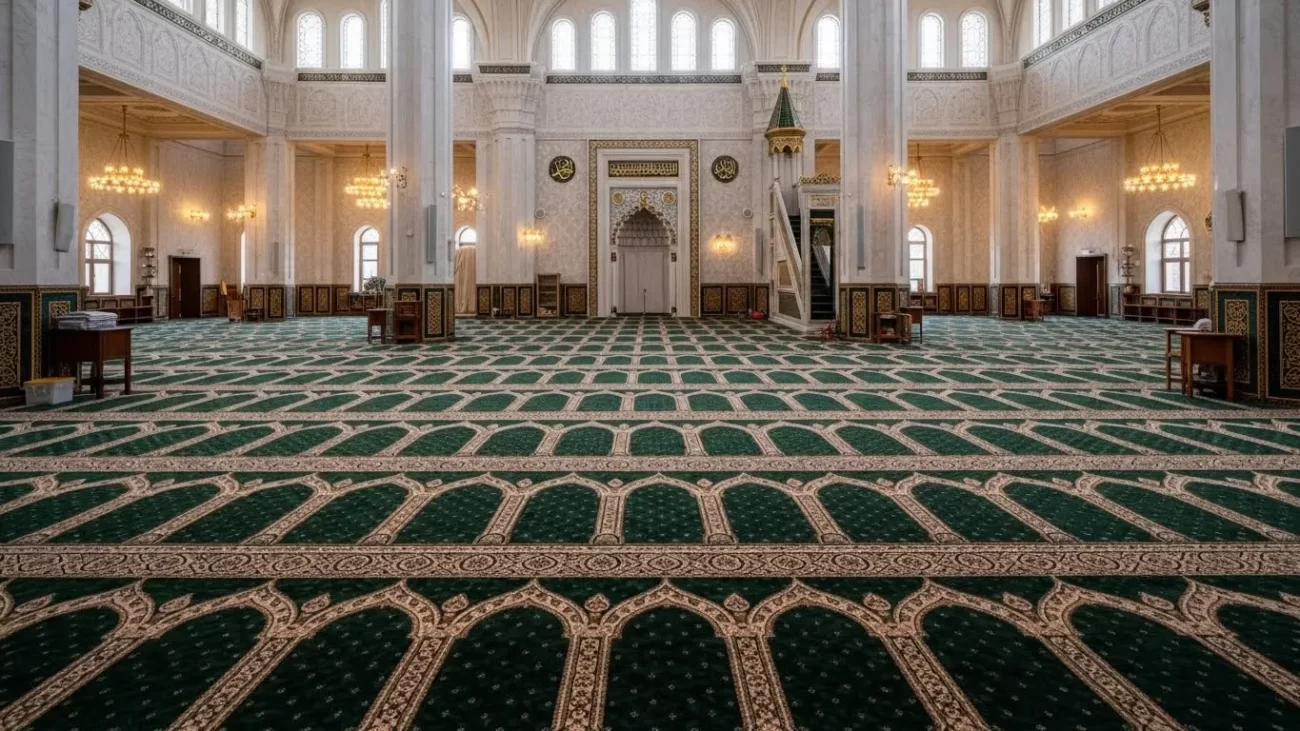
The floor occupies one of the largest visual surfaces in the prayer hall. If the tiles use complex geometric patterns, an equally complex carpet can create excessive visual competition. Alternatively, a restrained carpet can allow detailed tile and calligraphy work to become the primary feature. The best interiors establish this hierarchy intentionally.
Coordinate Timber and Lighting
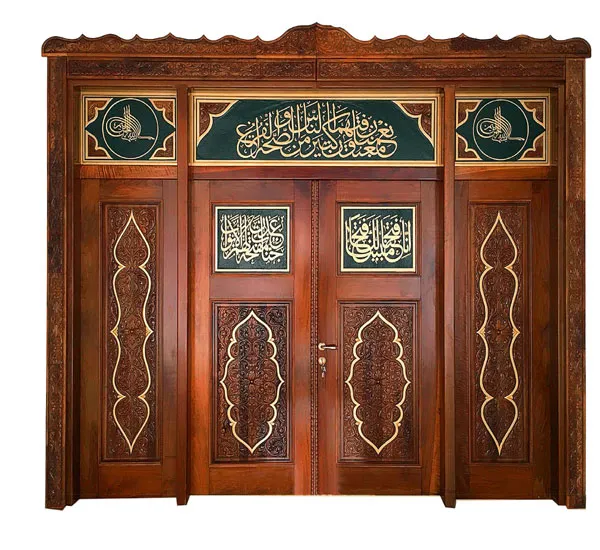
Wooden doors, Qur’an cabinets, minbars and mihrabs can introduce warmth to a tile-rich interior. Lighting then determines how all these materials are perceived. Good architectural lighting can reveal the surface texture and colour of ceramics without producing distracting reflections.
Bespoke Design Creates Cohesion
Buying a carpet from one catalogue, tiles from another and calligraphy from an unrelated source can produce a fragmented interior. A more effective approach is to establish the design concept first and then develop each element around it.
Masjid Direct supplies Turkish tiles and provides Islamic calligraphy alongside mosque carpet, mihrab and wider architectural design services, allowing these elements to be considered as parts of one interior.
Frequently Asked Questions
Can mosque tiles be custom designed?
Bespoke decorative schemes can be created around architectural dimensions, patterns and selected colour palettes.
Are Turkish tiles suitable only for traditional mosques?
No. Traditional materials and patterns can also be used selectively within contemporary mosque interiors.
Where are decorative tiles commonly used?
Mihrabs, qibla walls, entrance features, decorative panels and selected architectural zones are common applications.
Can calligraphy be incorporated with tiles?
Yes. Calligraphy can form part of a ceramic composition or be created as a separate architectural feature.
Turkish Mosque Tiles and Islamic Calligraphy in the UK
Masjid Direct helps UK mosque projects access specialised Turkish manufacturing, Islamic tiles, calligraphy and coordinated interior products from its London base.