


About The Foundation of Faith: How to Choose the Perfect Masjid Carpet for Your Community
The mosque, or masjid, is the spiritual and communal heart of a Muslim community. Its design and interior elements are carefully chosen to foster an environment of peace, focus, and devotion. While grand domes and intricate calligraphy often capture the eye, the true foundation of the prayer hall—both literally and figuratively—is the carpet. The masjid carpet is not merely a floor covering; it is the surface upon which millions of prostrations are made, a symbol of unity as worshippers stand shoulder-to-shoulder, and a canvas for beautiful Islamic art. A well-chosen carpet provides comfort, durability, and a sense of direction, all of which are essential for a fulfilling prayer experience.
This guide, The Foundation of Faith: How to Choose the Perfect Masjid Carpet for Your Community | Masjid Direct, serves as an essential resource for mosque committees, imams, and community members tasked with this important decision. We will delve into every aspect of the selection process, from understanding different materials and their properties to the symbolic meanings of patterns and colors. We recognize that each community has its own unique needs, budget, and aesthetic preferences. This guide is designed to help you navigate these considerations and make a choice that will serve your community for decades to come.
The process of choosing a masjid carpet is a significant one. It is a long-term investment that affects the comfort and spiritual experience of every person who enters the prayer hall. We will explore the technical specifications, such as pile height and density, which are critical for longevity and comfort. We will also discuss the artistic side, including how to select a pattern that not only guides worshippers into straight lines (saffs) but also enhances the overall beauty and spiritual ambiance of the space.
Whether you are building a new mosque, renovating an existing one, or simply need to replace an old carpet, this comprehensive guide will provide you with the knowledge you need to make the perfect choice. The information is based on extensive experience and a deep understanding of the unique requirements of a sacred space. Ultimately, The Foundation of Faith: How to Choose the Perfect Masjid Carpet for Your Community | Masjid Direct is about empowering you to create a beautiful and comfortable sanctuary that strengthens the community’s bond with their faith.
Details of The Foundation of Faith: How to Choose the Perfect Masjid Carpet for Your Community
Choosing a masjid carpet is a detailed process that goes far beyond a simple aesthetic choice. The durability, comfort, and functionality of the carpet are paramount, and they are all determined by a set of specific technical and design details. This section of The Foundation of Faith: How to Choose the Perfect Masjid Carpet for Your Community | Masjid Direct breaks down these details to help you make an informed decision. The material of the carpet is the first and most critical detail. The two primary options are wool and synthetic fibers, each with its own set of advantages and disadvantages.
Understanding Carpet Materials
Wool is the traditional choice for mosque carpets. It is known for its exceptional durability, luxurious feel, and natural resistance to fire and dirt. Wool fibers are highly resilient and can withstand heavy foot traffic while retaining their shape. The material also has excellent acoustic properties, helping to absorb sound and reduce echo in the prayer hall. However, wool is a more expensive option and may require professional cleaning to maintain its pristine condition.
Synthetic fibers, such as nylon and polypropylene, are a modern, popular alternative. Nylon is extremely durable and resilient, often surpassing wool in its ability to resist wear and tear. It is also highly stain-resistant and can be easily cleaned. Polypropylene, on the other hand, is an affordable and colorfast option that is resistant to moisture and stains, making it an excellent choice for areas with high foot traffic. While synthetic carpets may not offer the same luxurious feel as wool, their practicality, affordability, and ease of maintenance make them a highly viable option for many communities.
Technical Specifications: Pile, Density, and Backing
Beyond the material, the technical specifications of a carpet determine its quality and longevity. The pile height refers to the length of the carpet fibers. A higher pile can be softer and more comfortable for prostration, but in high-traffic areas, a shorter, denser pile is often more durable and easier to clean. The pile density is the number of tufts per square inch. This is a crucial indicator of quality; a higher density means a more resilient carpet that will resist flattening and wear over time.
The carpet backing is another detail that is often overlooked but is essential for the carpet’s stability and durability. A high-quality backing, often made of durable materials like jute or a synthetic blend, prevents the carpet from stretching, wrinkling, or shifting. This is especially important in a prayer hall where worshippers need to stand in straight, well-aligned rows.
Design and Aesthetics: The Role of Patterns
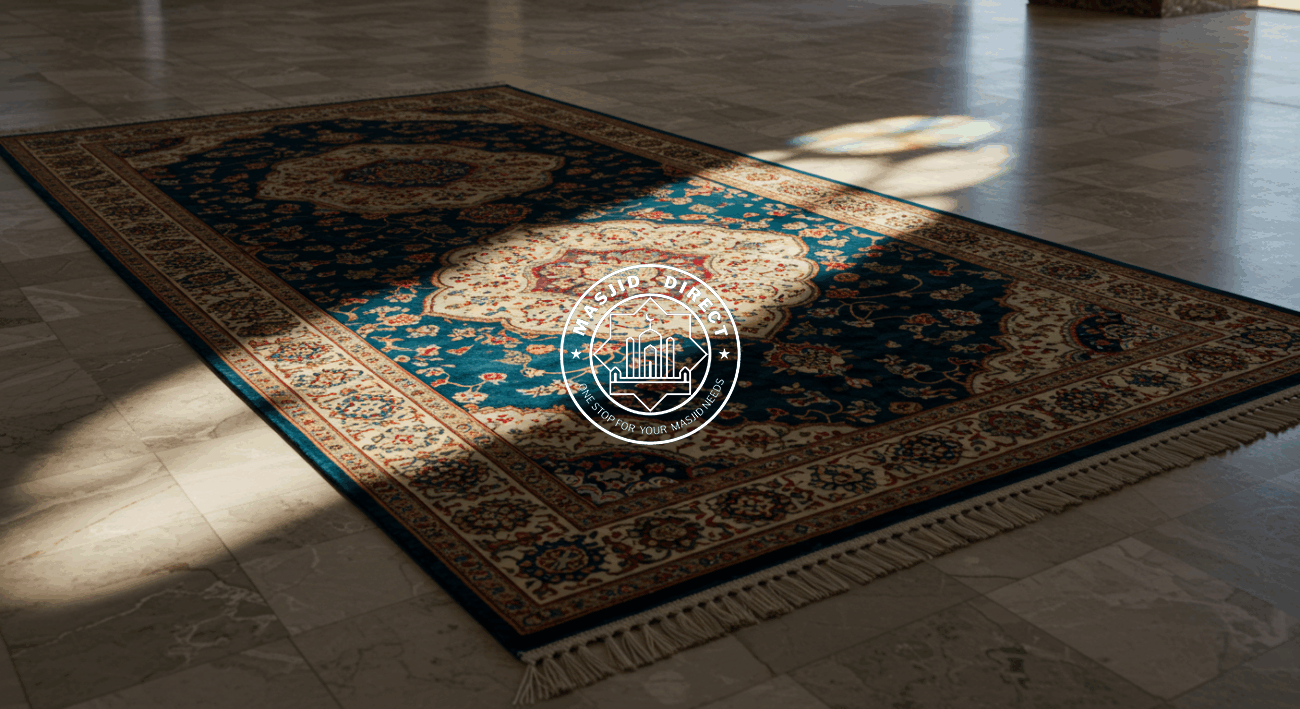
The design of the carpet is not just for beauty; it has a crucial functional purpose. Many mosque carpets feature distinct prayer lines, or saff lines, which help congregants form straight, organized rows for communal prayer. This is a spiritual and practical detail that enhances the sense of unity and discipline. The patterns themselves—ranging from intricate geometric shapes and arabesques to simpler, repeating designs—can create a sense of harmony and peace. The color palette should be calming and conducive to reflection. Cool tones like blues and greens are often associated with peace and tranquility, while warmer tones can create a more intimate and welcoming atmosphere.
Customization and Installation
A custom-designed carpet can be a masterpiece that perfectly fits the unique dimensions of a mosque, including any pillars or irregular shapes. The process involves precise measurements and a detailed layout plan. The manufacturing process is then tailored to produce a seamless, wall-to-wall carpet. The installation is the final critical detail. A professional installation ensures that the carpet is laid out flawlessly, without any wrinkles or misalignments, which is essential for both aesthetics and safety. The details outlined here in The Foundation of Faith: How to Choose the Perfect Masjid Carpet for Your Community | Masjid Direct are what transform a simple purchase into a long-lasting, spiritually enriching investment.
Features of The Foundation of Faith: How to Choose the Perfect Masjid Carpet for Your Community
The process outlined in The Foundation of Faith: How to Choose the Perfect Masjid Carpet for Your Community | Masjid Direct highlights a series of key features that define a high-quality, modern masjid carpet. These features are designed to address the specific needs of a mosque, balancing durability with aesthetic appeal and spiritual functionality. One of the most important features is durability and resilience. A mosque is a high-traffic area, with thousands of prostrations a day, especially during busy periods like Friday prayers and Ramadan. The best carpets are made from materials and with manufacturing techniques that allow them to withstand this constant use without showing significant wear and tear. A carpet with high pile density and a strong backing is a hallmark of this feature.
Another crucial feature is ease of maintenance. A masjid must be kept clean to preserve the sanctity of the space. Carpets that are stain-resistant and easy to vacuum and deep-clean are a major asset. Synthetic carpets, in particular, excel in this area. Their low-absorbency fibers prevent spills from setting in, and their resilience means they can handle frequent cleaning without losing their vibrancy or structural integrity. This feature is particularly important for mosques with limited volunteer staff or a tight cleaning budget.
The customization and design feature allows for a truly unique and tailored solution for each mosque. Instead of a standard, off-the-shelf product, a custom carpet can be designed to fit the exact dimensions of the prayer hall, avoiding seams and creating a single, continuous piece. The design can also incorporate specific colors, patterns, and even calligraphic elements that are meaningful to the community. The guide, The Foundation of Faith: How to Choose the Perfect Masjid Carpet for Your Community | Masjid Direct, emphasizes how this customization can transform a prayer hall into a true work of art that is a reflection of the community’s identity.
A final, but equally important, feature is comfort and sound absorption. A good carpet provides a soft, cushioned surface for prostration, making prayer more comfortable. The material of the carpet can also act as a natural acoustic buffer. It absorbs sound waves, reducing echo and reverberation in the often-cavernous prayer hall. This feature is essential for ensuring that the Imam’s voice is clear and the recitations are heard without distortion, creating a peaceful and focused environment for worship.
Areas of The Foundation of Faith: How to Choose the Perfect Masjid Carpet for Your Community
The principles outlined in The Foundation of Faith: How to Choose the Perfect Masjid Carpet for Your Community | Masjid Direct apply to every area of a mosque where comfort, durability, and a sense of sacred space are important. While the main prayer hall is the primary focus, other areas also require careful consideration.
The Main Prayer Hall: The Heart of the Masjid
The main prayer hall is the central area for all congregational prayers, and its carpet is the most significant.
Functionality and Spiritual Guidance
The carpet in the main prayer hall must be chosen for its durability and its ability to guide worshippers. The prayer lines are a functional and symbolic feature, ensuring that the saffs are straight, which is a key component of communal prayer. The carpet’s design and color palette should be spiritually uplifting and free from distracting elements. A cohesive design here sets the tone for the entire building.
The Women’s Prayer Area: A Sanctuary of Tranquility
Many mosques have a separate prayer area for women, and its design should be as thoughtful as the main hall.
Comfort and Aesthetic Harmony
The women’s prayer area should be a comfortable and peaceful space. The carpet here should be of the same high quality as the main hall, providing a soft surface for prayer. While the design can be identical to the main hall to create a sense of unity, it can also have its own unique, softer aesthetic to make the space feel more tranquil and intimate.
The Foyer and Entrance: The First Impression
The foyer is the first part of the mosque that visitors see, and the flooring here must be both practical and beautiful.
Durable and Welcoming Flooring
The entrance and foyer experience heavy foot traffic from people entering and leaving the mosque. The flooring here should be highly durable and easy to clean. While a carpet is an option, many mosques choose a combination of hard-wearing materials like tile or laminate in the entrance area and transition to a durable, low-pile carpet in the main foyer. The design should be welcoming and inviting, providing a smooth transition from the outside world into the sacred space.
The Multi-Purpose Hall: Flexibility and Durability
Many mosques have multi-purpose halls used for lectures, community events, and overflow during large gatherings. The flooring here needs to be flexible and durable.
Carpet Tiles for Versatility
For multi-purpose halls, masjid carpet tiles are an excellent option. They are highly durable, and if a section becomes damaged, it can be easily replaced without having to replace the entire carpet. Carpet tiles also allow for creative layouts and can be used to delineate different functional areas within the hall. This is a practical and cost-effective solution for a versatile space.
Application Examples of The Foundation of Faith: How to Choose the Perfect Masjid Carpet for Your Community
Here are some practical examples of how the principles from The Foundation of Faith: How to Choose the Perfect Masjid Carpet for Your Community | Masjid Direct have been applied to real-world projects.
Example 1: The New Community Mosque
A newly built mosque in a suburban area needed a durable, modern, and aesthetically pleasing carpet that could handle a large, growing community.
High-Density Synthetic Carpet
The committee chose a high-density nylon carpet. This material offered the best of both worlds: it was exceptionally durable, making it resistant to the wear and tear of a new community, and it was easy to clean and maintain, which was a key consideration for a mosque with a small volunteer staff. The carpet was designed with a geometric pattern in calming shades of blue and gray, providing a modern look that was still deeply rooted in Islamic aesthetics.
Customized Saff Lines
The mosque had a unique, semi-circular layout. The carpet was custom-manufactured to fit this specific shape, with the saff lines radiating out from the mihrab. This ensured that every worshipper was aligned correctly, regardless of where they were in the prayer hall, a critical feature for a new congregation learning to pray together.
Example 2: The Historic City Mosque
A historic mosque in a city center was undergoing a major renovation and wanted to restore its original grandeur with a high-quality, traditional carpet.
Luxurious Custom-Woven Wool Carpet
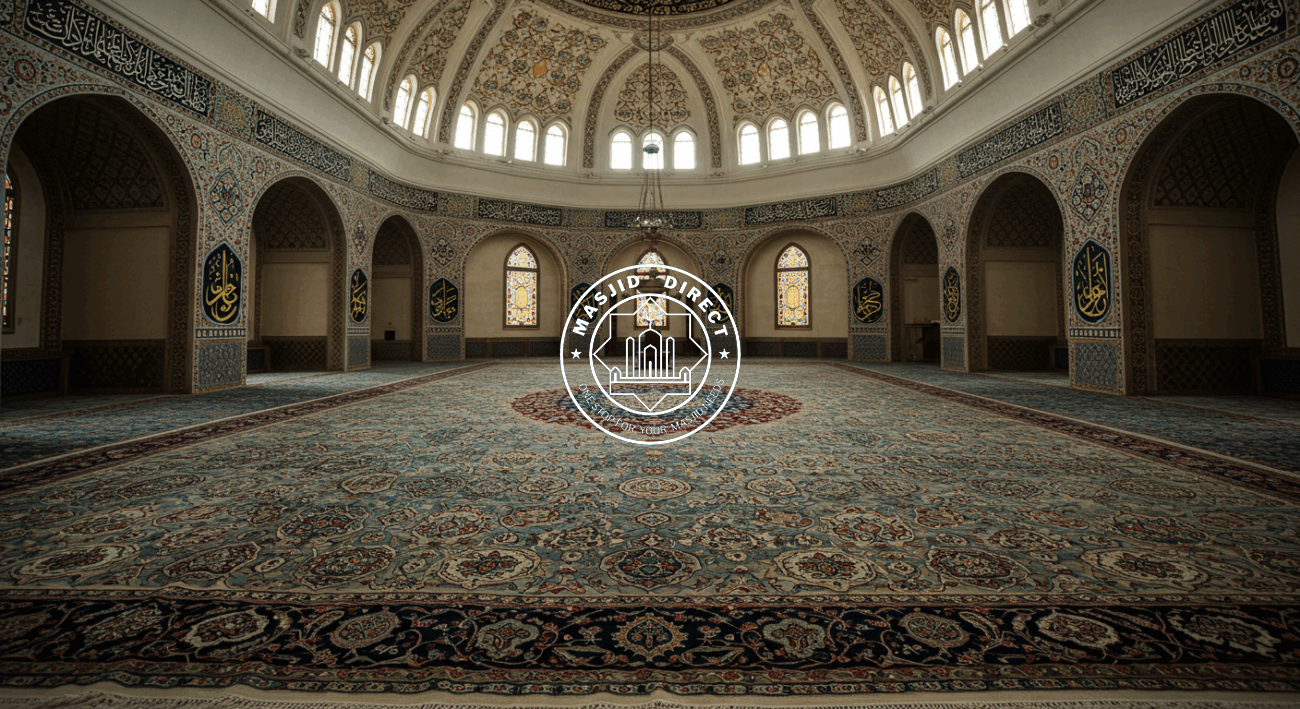
The committee opted for a luxurious, custom-woven wool carpet. Wool’s natural resilience and softness were perfect for the mosque’s high-traffic areas and provided the comfort that the community desired. The carpet was designed to replicate a classic Ottoman-era pattern with intricate floral motifs and rich, deep colors like maroon and gold, honoring the mosque’s history.
Seamless Wall-to-Wall Installation
To maintain the traditional aesthetic and ensure a flawless appearance, the carpet was designed and installed as a single, wall-to-wall piece. The prayer lines were seamlessly integrated into the pattern, and the expert installation ensured that there were no visible seams or wrinkles, creating a perfectly smooth surface for prayer.
Example 3: The Small Neighborhood Masjid
A small, local mosque had a very limited budget but needed to replace its old, worn-out carpet.
Cost-Effective and Durable Polypropylene
The committee chose a high-quality polypropylene carpet. This was the most cost-effective option, and modern polypropylene is incredibly durable and stain-resistant. The carpet had a simple, repeating design in a calming shade of green, which made the small space feel larger and more open.
DIY-Friendly Modular Tiles
For the mosque’s small community hall, they used modular carpet tiles. This was a perfect solution for the limited budget, as they could be installed by a few community volunteers, saving on labor costs. If a tile ever gets damaged, it can be easily replaced, ensuring that the flooring remains in excellent condition for years to come.
Example 4: The Multi-Purpose Islamic Center
An Islamic center with a large prayer hall that is also used for community gatherings, lectures, and children’s programs needed a versatile and highly durable flooring solution.
Multi-Layered Flooring System
The center opted for a multi-layered flooring system. The main prayer hall was fitted with a high-quality, dense carpet for comfort during prayer. The surrounding areas, such as the entryways and hallways, used a durable, easy-to-clean tile. For the main community hall, they used a commercial-grade carpet tile system that could withstand heavy use and was easy to maintain.
Zoned Design for Different Functions
The flooring design was zoned to reflect the different functions of the building. The prayer hall’s carpet had clear prayer lines, while the community hall’s carpet tiles had a different, more abstract pattern. This created a visual and functional separation between the sacred space and the multi-purpose areas, ensuring that each area was perfectly suited for its intended use.
The Foundation of Faith: How to Choose the Perfect Masjid Carpet for Your Community FAQs
This section addresses some of the most common questions that mosque committees and individuals have about the process of choosing a masjid carpet.
1. What is the most important factor to consider when choosing a masjid carpet?
The most important factor is a balance between durability and comfort. A mosque carpet must be able to withstand constant foot traffic and prostrations while remaining soft enough to provide a comfortable surface for prayer. The material (wool or synthetic), pile density, and pile height all contribute to this balance. It is a long-term investment, so choosing a durable, high-quality carpet is more cost-effective in the long run.
2. How do we measure our mosque for a new carpet?
Accurate measurement is crucial to avoid waste and ensure a perfect fit. It is best to have a professional from a reputable company like Masjid Direct measure the space. They will account for pillars, niches, and any irregular shapes, creating a detailed layout plan. If you choose to measure yourself, use a tape measure and a detailed sketch, and double-check all your measurements to ensure accuracy.
3. How can we ensure the carpet’s design aligns with our community’s identity?
Working with a company that offers custom design services is the best way to ensure the carpet reflects your community’s identity. You can provide them with inspiration from your local culture or a specific aesthetic you admire. They can then create a custom design that incorporates your chosen colors, patterns, or even calligraphy. This process ensures that the carpet is a unique and meaningful addition to your mosque.
4. How often should a masjid carpet be replaced?
With proper maintenance, a high-quality masjid carpet can last for 10-20 years or even longer. The lifespan depends on the material, the amount of foot traffic, and the frequency of cleaning. Regular vacuuming and professional deep cleaning at least once a year can significantly extend the life of the carpet. The choice of material also plays a big role, as a high-density wool or nylon carpet will outlast a lower-quality synthetic one.
5. Can a masjid carpet help with acoustics?
Yes, a good masjid carpet can significantly improve the acoustics of a prayer hall. The dense pile and fibers absorb sound waves, reducing echo and reverberation. This is particularly important in mosques with high ceilings and hard surfaces, which are prone to creating a loud, echoing environment. The right carpet helps to create a quieter, more peaceful space where the Imam’s voice is clear and the prayer experience is more focused. You can find more information about the acoustic properties of carpets from
6. How can a mosque on a limited budget get a high-quality carpet?
A limited budget doesn’t mean you have to sacrifice quality. Focus on finding a reputable supplier that offers durable and affordable synthetic carpets, such as high-grade polypropylene. These carpets are highly durable and easy to maintain. Choosing a modular carpet tile system for multi-purpose areas is also a cost-effective solution, as it can be installed by volunteers and allows for easy replacement of damaged sections. A focused, well-planned approach to The Foundation of Faith: How to Choose the Perfect Masjid Carpet for Your Community | Masjid Direct can yield beautiful and durable results without overspending.
The Foundation of Faith: How to Choose the Perfect Masjid Carpet for Your Community | Masjid Direct is more than just a guide on flooring; it is a comprehensive resource for a decision that will shape the spiritual environment of a mosque for years to come. By understanding the intricate details of materials, design, and functionality, mosque committees can make a choice that balances practicality with aesthetic and spiritual needs. A well-chosen masjid carpet is an investment in the comfort, unity, and devotion of the community, creating a sacred space that is truly a foundation of faith.