

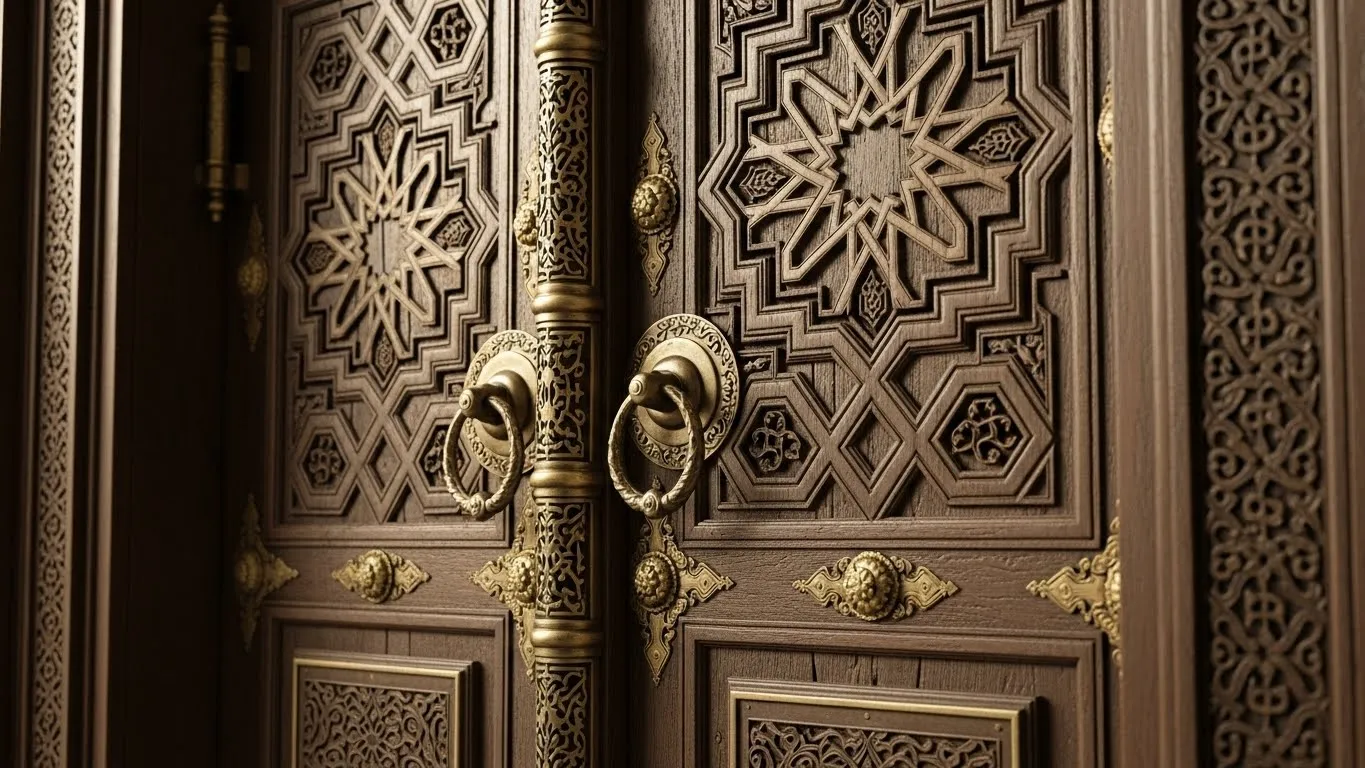
The Masjid door | Masjid Direct collection stands at the critical intersection of functionality, security, and sacred aesthetics. The mosque door is far more than a simple entry point; it is a symbolic threshold, marking the transition from the bustling temporal world (dunya) to the tranquil, spiritual domain of worship (Ibadah). It is the first architectural element a worshiper touches and the primary visus, technical specifications, and varied applications of mosque doors, highlighting how Masjid door | Masjid Direct are setting new international standards for durability, artistry, and security in sacred architecture globally.
1. The Historical and Symbolic Significance of the Masjid Door
Throughout Islamic history, the design and craftsmanship of the mosque door have reflected the cultural and artistic zenith of their respective eras, from the simplicity of early timber gates to the intricate metalwork of imperial periods.
1.1. The Door as a Liminal Threshold
The entrance, often framed by a massive, recessed portal (Iwan or Pishtaq), prepares the worshipper for the act of devotion. The grand scale and rich decoration of the main Masjid door emphasize the majesty and importance of the space within.
1.1.1. Inscriptions and Divine Guidance
It is common for mosque doors to be adorned with inscriptions from the Qur’an or the names of Allah. These calligraphic elements serve not only as decoration but also as spiritual reminders and blessings for those who enter and exit. Common inscriptions include verses about peace, entering with humility, or seeking protection.
1.1.2. Security and Status in Historical Context
Historically, the strength and material richness of the Masjid door (often reinforced with iron or bronze) reflected the political and financial power of the patron and provided essential security for the structure and its contents. The robust construction techniques used then inform the high-security standards applied in Masjid door | Masjid Direct designs today.
1.2. Evolution of Door Design Across Islamic Civilizations
Different architectural schools developed distinctive approaches to door design, reflecting local materials and artistic traditions.
1.2.1. Seljuk and Mamluk Woodworking Mastery
The Seljuks and Mamluks were masters of intricate wooden door construction. Techniques such as Kündekâri (a complex interlocking wood joinery that uses no nails or glue) created highly durable and geometrically stunning panels. The geometry often featured repeating star patterns, symbolizing the infinite nature of God.
1.2.1.1. Influence of Climate on Door Construction
In temperate regions, solid hardwood doors were common. In drier climates, doors were often fortified with ornamental metal plating to prevent warping and cracking, demonstrating an early architectural response to environmental factors.
1.2.2. Ottoman and Mughal Metal Cladding
The Ottoman and Mughal empires favoured large, grand doors often clad in elaborately embossed or engraved metal sheets (brass, copper, or sometimes silver), providing a highly reflective and majestic surface that would gleam under sunlight. The craftsmanship focused on deep, flowing floral and stylized script motifs. Masjid door | Masjid Direct carries this legacy forward with modern, precision-engineered metal finishes.
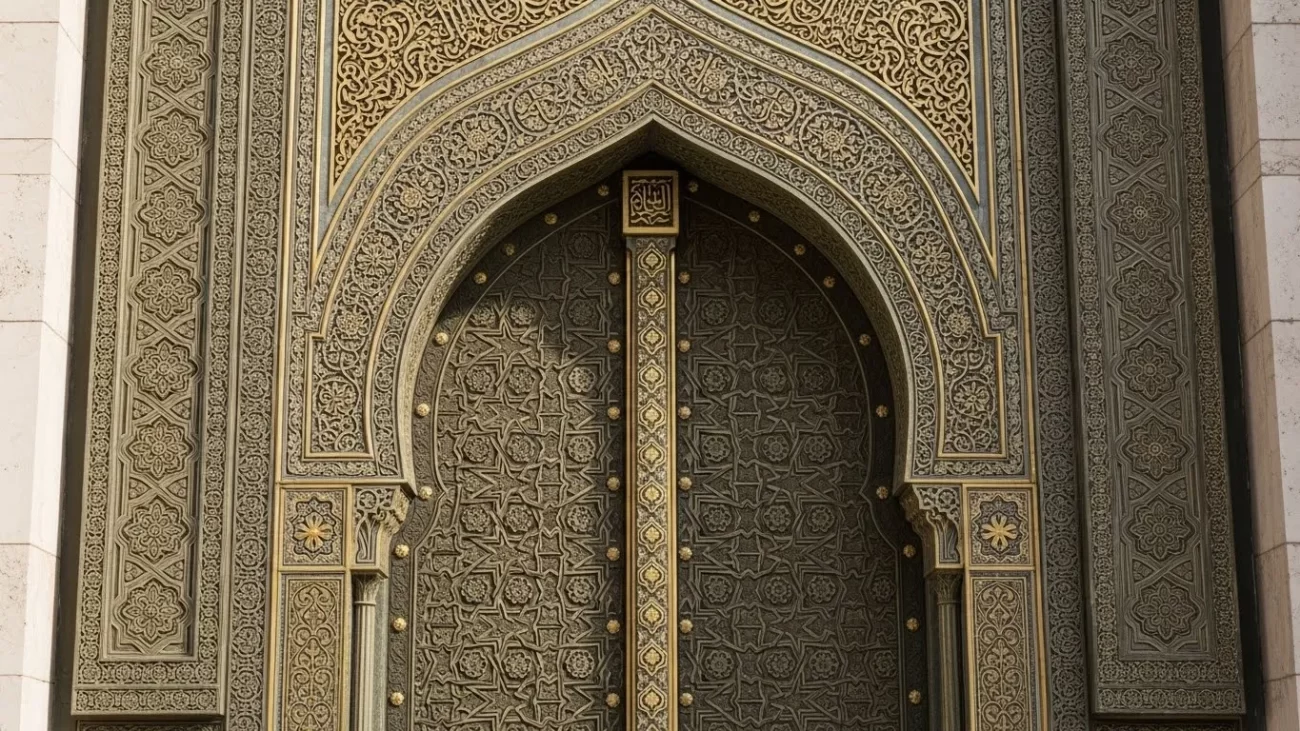
2. Masjid Door: Engineering for Durability, Security, and Aesthetics
A modern mosque door must fulfill rigorous demands for public safety, long-term durability, accessibility, and high aesthetic fidelity. Masjid Direct approaches door design as a complex engineering project where material selection and mechanism design are paramount.
2.1. Material Science and Long-Term Performance
The primary challenge is selecting materials that can withstand high foot traffic, variable weather, and the desire for a timeless, grand appearance.
2.1.1. High-Grade Hardwoods and Engineered Wood Cores
For traditional-style wooden doors, Masjid door | Masjid Direct uses dense, rot-resistant hardwoods such as Teak, Walnut, or Iroko. To enhance stability and prevent warping—a critical issue in large doors—they often utilize engineered laminated cores beneath the exterior veneer. This modern technique ensures the door retains its shape and structural integrity regardless of humidity fluctuations.
2.1.1.1. Metal Alloys for Cladding and Inlay
When metal cladding is required, Masjid Direct specifies corrosion-resistant alloys like marine-grade 316 Stainless Steel or architectural bronze. The metal is precision-cut using CNC and water-jet technology before being meticulously applied, often as repoussé (hammered relief) panels or detailed geometric inlays. This ensures the intricate artistry lasts without tarnishing.
2.2. Advanced Security and Access Systems
As public buildings, mosque doors require sophisticated locking and access systems to ensure both security when closed and rapid, safe egress during emergencies.
2.2.1. Multi-Point Locking and Reinforcement
Masjid door | Masjid Direct integrates multi-point locking systems, often paired with electro-magnetic locks, for maximum security. The internal framing is reinforced with heavy-gauge steel to resist forced entry. For main entrance doors, security may include hidden panic bars that allow instantaneous exit but remain concealed from the exterior.
2.2.2. Accessibility and Automated
Modern mosque design must prioritizOperation e ADA Compliance and universal accessibility. Masjid Direct provides integrated, low-energy automatic door operators that can manage the movement of heavy doors while ensuring smooth, quiet operation. The use of clear thresholds and appropriate door width is standard in all designs.
2.3. Thermal and Acoustic Performance
A well-engineered mosque door contributes significantly to the energy efficiency and acoustic quality of the Musalla.
2.3.1. Insulation and Weather Sealing
Masjid door | Masjid Direct main doors feature internal insulation layers (e.g., high-density foam) to minimize heat loss/gain. Comprehensive weather sealing (gaskets and automatic bottom seals) prevents air, moisture, and dust infiltration, which is crucial for maintaining the climate control within the prayer hall and protecting interior finishes like the Mihrab and Minbar.
2.3.2. Noise Reduction and Sound Isolation
Doors facing noisy urban streets require high acoustic damping. By increasing the door’s mass, using dense core materials, and ensuring airtight sealing, Masjid Direct doors achieve significant Sound Transmission Class (STC) ratings, ensuring the serenity of the interior prayer space is protected from external disturbances.
3. Masjid Door Applications and Design Typologies
The requirements for a mosque door vary dramatically based on the door’s function (main entrance vs. internal) and the architectural style of the mosque itself. Masjid Direct offers specialized solutions for each typology.
3.1. Main Entrance Portals (The Great Door)
The main Masjid door is the focal point of the exterior façade, built for monumental visual impact and heavy traffic flow.
3.1.1. Grand Scale and Multi-Panel Construction
These doors are often double-leafed and exceptionally tall, requiring specialized heavy-duty pivot or roller hinges. Masjid door | Masjid Direct designs for this category typically feature deeply carved or embossed surfaces, often with a large central medallion and intricate surrounding borders that align with the geometry of the portal.
3.1.1.1. The Use of Iwan and Pishtaq Framing
The door is typically framed by a recessed archway (Iwan or Pishtaq). The door’s design is carefully calibrated to the geometry of this framing, with the door’s decorative pattern flowing seamlessly into the surrounding stone or tilework, creating a visual masterpiece that emphasizes majesty.
3.2. Internal Doors (Connecting Spaces)
Internal doors connect the Musalla to the Wudu areas, offices, or auxiliary prayer rooms. Their focus is on high utility, quick access, and acoustic separation.
3.2.1. Functional Simplicity and Acoustic Dampening
Internal doors are generally simpler in design, often single-leaf, focusing more on functional finishes, durability (e.g., heavy-duty veneer or laminate), and achieving the required STC rating to prevent noise from restrooms or offices disturbing the prayer hall.
3.2.1.1. Doors for Women’s Sections and Mezzanines
Doors leading to segregated women’s prayer sections or mezzanines require specific design consideration. They must be clearly marked yet aesthetically integrated, often incorporating vision panels with frosted or patterned glass to provide a subtle visual link while maintaining privacy.
3.3. Minbar and Mihrab Doors (Symbolic Entrances)
Some mosque traditions include small, highly decorative doors leading into the Mihrab niche (if applicable) or the base of the Minbar. These are primarily symbolic or for maintenance access.
3.3.1. Miniature Craftsmanship and Symbolic Materials
These doors are small in scale but often exhibit the highest level of craftsmanship, featuring precious materials like silver plating, mother-of-pearl inlay, or exceptionally fine carving. Masjid door | Masjid Direct treats these as highly specialized artistic pieces, ensuring the material and motif directly complement the primary Mihrab or Minbar element they adorn.
3.3.1.1. Emphasis on Lock and Hinge Detailing (LSI Keyword: Hardware)
Given their ceremonial nature, the hardware (handles, locks, hinges) on these doors is often bespoke and ornate, crafted from polished brass or bronze, symbolizing the importance of the sacred furniture they protect or enclose.
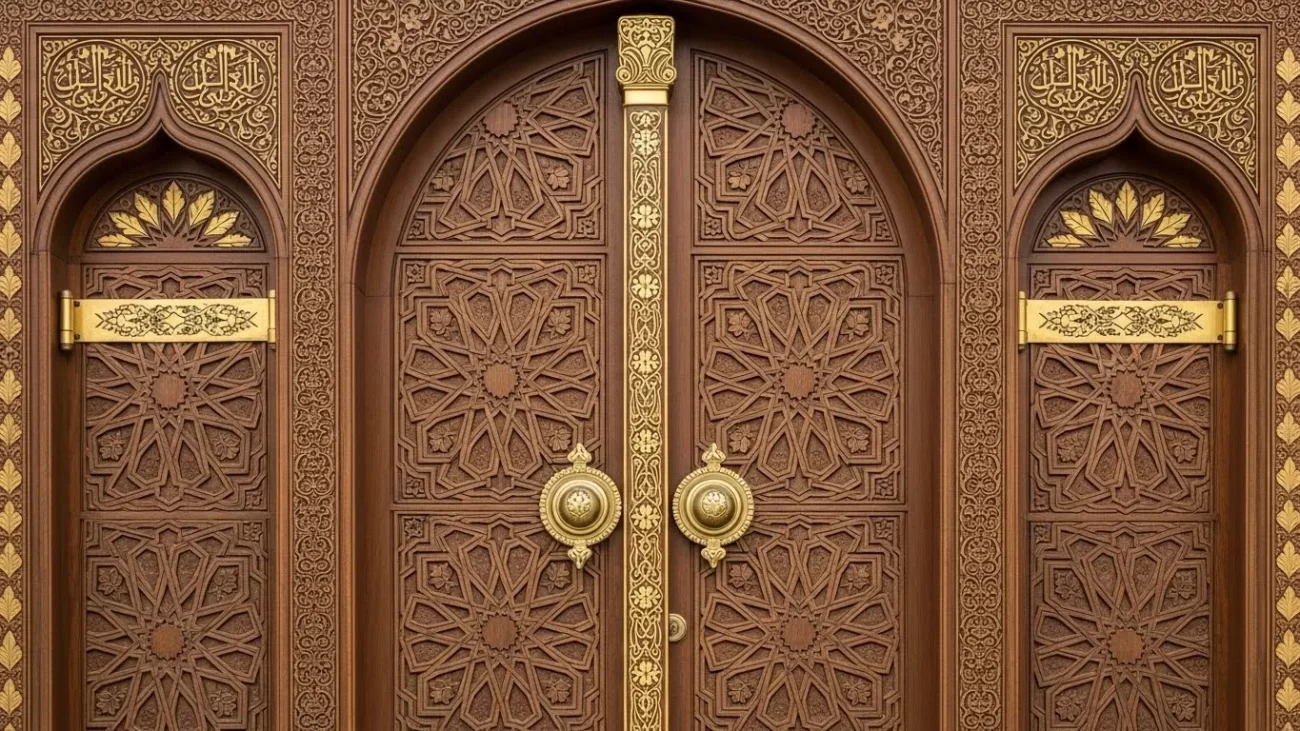
4. Masjid Door Installation and Project Examples
Instead of formal case studies, this section will detail diverse practical applications by category, focusing on the engineering challenges and material solutions provided by Masjid door | Masjid Direct for various project types.
4.1. Application Example: High-Traffic Airport and Transit Center Musallas
Projects in transportation hubs demand extreme durability, rapid access, and compliance with stringent international fire codes. The doors must operate seamlessly 24/7.
4.1.1 Hygienic and Minimalist Aesthetics
The aesthetic is typically minimalist and hygienic. The doors are often clad in anti-microbial stainless steel or durable laminates. The design avoids deep crevices or carvings that can harbor dust or require complex cleaning, instead featuring simple, sandblasted or etched calligraphy for subtle spiritual marking.
4.2. Application Example: Traditional Mosques in Cold Climates (e.g., Canada/Scandinavia)
Mosques built in regions with extreme cold, snow, and large temperature differentials face unique structural challenges related to thermal performance and ice formation.
4.2.1. Thermal Break Technology and Icing Prevention
The main Masjid door | Masjid Direct exterior entry features thermal break technology within the metal frame structure. This non-conductive barrier prevents the exterior cold from transferring to the interior face of the door and frame, eliminating interior condensation and potentially dangerous ice formation near the entrance. The doors are specified with triple-pane security glass for any vision panels to maximize insulation.
4.2.2. Heavy-Duty Weatherproofing and Draft Control
The door systems utilize robust, adjustable seals and sweep mechanisms designed to maintain their flexibility and sealing ability even in sub-zero temperatures. The door installation includes a vestibule or airlock system (double door entry) designed and supplied by Masjid Direct to further minimize cold air infiltration into the main prayer hall, preserving warmth and reducing heating costs.
4.3. Application Example: Grand Stone Mosques in Arid Climates (e.g., Middle East)
Projects in extremely hot and arid regions require doors that resist warping from intense heat, block dust, and manage the stark contrast between the heat outside and the typically air-conditioned interior.
4.3.1. High-Mass Construction and UV Resistance
Masjid door | Masjid Direct for these monumental mosques are typically solid bronze or heavy, metal-clad wooden doors. The sheer high mass helps to stabilize the temperature transfer. Any exterior finishes (lacquer, paint, or stain) are specified as UV-resistant and anti-fading to maintain the door’s colour and brilliance under continuous intense sunlight without degradation.
4.3.2. Dust-Proof Sealing and Access Control for Security
In desert environments, dust infiltration is a major concern. The door systems are engineered with interlocking weather seals and high-pressure closures to create an effective dust barrier. Given the high value of the traditional metalwork, advanced, yet discrete, access control systems (e.g., coded keypads or remote access) are often integrated, ensuring that the Masjid door | Masjid Direct remains secure while allowing easy access for authorized personnel.
4.4. Application Example: Community Centers and Multi-Purpose Masjids
These projects require highly versatile doors that can quickly adapt to different uses, such as separating a large hall into smaller classrooms or opening a wall for major events.
4.4.1. Operable Walls and Movable Acoustic Partitions
For flexibility, Masjid Direct provides specialized internal door solutions such as Operable Walls or Movable Acoustic Partitions. These are floor-to-ceiling panels that slide and stack neatly when open, but when closed, function as a solid wall with high acoustic separation (STC 50+), allowing the prayer hall to be quickly reconfigured for simultaneous separate activities.
4.4.2. Durable Finishes and Low-Maintenance Operation
The finish on these high-utility internal doors is usually durable laminate or vinyl covering that resists scuffs and marks from chairs and equipment. The operating tracks and trolleys are heavy-duty and low-maintenance, designed to ensure hundreds of smooth open/close cycles annually without requiring extensive servicing, guaranteeing the flexibility of the Masjid door | Masjid Direct system over time.
5. Future of Masjid Door
The Masjid door is a complex architectural element that carries significant symbolic weight while facing demanding modern engineering, security, and accessibility requirements. Masjid door | Masjid Direct stands out in this specialized field by providing comprehensive solutions that merge the artistry of traditional Islamic design with the precision and performance of contemporary construction scienc
By focusing on superior materials (e.g., engineered woods, thermal-break metal), advanced security features (multi-point locking, fire ratings), and functional elements (automated ADA compliance, acoustic sealing), Masjid door | Masjid Direct ensure that every entrance is not just a gateway, but a lasting, safe, and beautiful reflection of the mosque’s sacred purpose.
The depth of analysis confirms the value and specialized expertise that Masjid door | Masjid Direct offers to architects, builders, and committees involved in the construction and renovation of mosques worldwide, delivering products that define and protect the heart of the community.






https://shorturl.fm/rcNyc
Really cool article! Music creation can be so therapeutic, and accessible tools like Play Sprunki make it even easier. I love the idea of mixing loops – sounds like a fun way to unwind and be creative! ✨
تعتبر 888starz في مصر من أبرز المنصات التي تقدم خدمات متنوعة للاعبين. بفضل خدماتها المتعددة، تحتل هذه المنصة مكانة خاصة في سوق الألعاب. يوفر 888starz تجربة مستخدم رائعة تتناسب مع احتياجات اللاعبين. يمكن للاعبين الاستمتاع بمجموعة متنوعة من الألعاب التي تشمل القمار والألعاب الرياضية.
واجهة المستخدم في 888starz تتميز بالسهولة، مما يسهل على اللاعبين التنقل بين الأقسام المختلفة. توفر المنصة خيارات متعددة للإيداع والسحب، مما يجعل التعامل المالي سلسًا وآمنًا. تسعى 888starz دائمًا لتلبية احتياجات عملائها. تركز 888starz على تقديم مستوى عالٍ من الأمان والمصداقية.
888starz تسجيل الدخول https://888starzegypteg.com/